Bitcoin Dominance Shift: Why Real-World Asset Tokens Outperform BTC by 2026
By 2026, a strategic reallocation of 30% of Bitcoin holdings into Real-World Asset (RWA) tokens is anticipated to yield superior returns, driven by diversification benefits and the inherent stability of tokenized real-world assets.
The landscape of crypto investing is constantly evolving, presenting new opportunities and challenges for seasoned investors. One of the most compelling narratives emerging for the coming years is the significant Bitcoin dominance shift, advocating for a strategic reallocation of a portion of BTC holdings into Real-World Asset (RWA) tokens. This isn't just about diversification; it's about positioning portfolios for potentially superior performance in a rapidly maturing digital economy.
Understanding the Bitcoin Dominance Shift
The concept of Bitcoin dominance has long been a key metric in the cryptocurrency market, indicating Bitcoin's share of the total crypto market capitalization. While Bitcoin remains the undisputed king of digital assets, its dominance is not immutable. As the crypto ecosystem matures, new sectors and asset classes emerge, challenging Bitcoin's historical market share. This shift isn't a sign of Bitcoin's decline, but rather a reflection of the market's expansion and diversification.
Historically, Bitcoin's dominance has fluctuated, often receding during altcoin seasons and reasserting itself during bear markets. However, the current shift is fundamentally different, driven by the rise of legitimate, utility-driven projects, particularly those focused on tokenizing real-world assets. Investors are increasingly looking beyond speculative plays and towards assets that offer tangible value and predictable cash flows, characteristics often associated with traditional markets but now accessible on the blockchain.
The evolution of crypto market dynamics
The cryptocurrency market began primarily as a speculative arena, with Bitcoin leading the charge. Early investors were drawn by the promise of decentralization and exponential growth. While these factors remain relevant, the market has undergone a significant transformation. Institutional adoption, regulatory clarity, and technological advancements have paved the way for more sophisticated investment strategies.
- Early Market (2009-2015): Bitcoin-centric, niche adoption, high volatility.
- Growth Phase (2016-2020): Emergence of altcoins, ICO boom, DeFi primitives.
- Maturity & Diversification (2021-Present): Institutional interest, regulatory frameworks, rise of utility tokens and RWAs.
This evolution suggests that relying solely on Bitcoin for outsized returns may become less effective as the market broadens. Diversifying into emerging sectors, especially those bridging traditional finance with blockchain, becomes a prudent strategy for optimizing portfolio performance in the long term. The diminishing returns from pure Bitcoin plays necessitate a re-evaluation of investment allocations.
In conclusion, the Bitcoin dominance shift signifies a maturing market where value is increasingly distributed across various, more specialized crypto assets. Understanding this fundamental change is crucial for investors aiming to optimize their portfolios and capitalize on new opportunities.
The Rise of Real-World Asset (RWA) Tokens
Real-World Asset (RWA) tokens represent a groundbreaking innovation in the blockchain space, bridging the gap between traditional finance and decentralized ecosystems. These tokens are digital representations of tangible or intangible assets existing in the physical world, such as real estate, fine art, commodities, intellectual property, or even private credit. By tokenizing these assets, blockchain technology introduces unprecedented liquidity, fractional ownership, transparency, and accessibility to markets that were once exclusive and illiquid.
The process involves digitizing legal ownership or economic rights to an asset, then issuing a corresponding token on a blockchain. This token can then be traded, lent, or used as collateral within decentralized finance (DeFi) protocols. The underlying asset typically remains off-chain, held by a custodian or through a legal framework that links the digital token to its physical counterpart.
Benefits of RWA tokenization
The tokenization of real-world assets offers a multitude of advantages that are attractive to both institutional and retail investors. These benefits contribute significantly to their appeal as a diversification tool against traditional crypto volatility.
- Increased Liquidity: Historically illiquid assets like real estate can be traded 24/7 on global blockchains.
- Fractional Ownership: Investors can own a fraction of high-value assets, lowering entry barriers.
- Enhanced Transparency: Blockchain records provide immutable proof of ownership and transaction history.
- Reduced Costs: Eliminates intermediaries and streamlines administrative processes.
- Global Accessibility: Anyone with an internet connection can potentially invest, regardless of geographical location.
These advantages transform how investors interact with traditional asset classes, making them more efficient and inclusive. The ability to access these benefits through a decentralized framework makes RWA tokens a powerful new frontier in investing.
The growth of RWA tokens is not merely a theoretical concept; it's a rapidly expanding sector with significant institutional backing. Major financial institutions are exploring and implementing RWA tokenization for various asset classes, signaling a strong belief in their long-term potential. This integration into mainstream finance further validates their position as a serious contender for portfolio allocation.
Why Reallocate 30% of BTC Holdings?
The recommendation to reallocate 30% of Bitcoin holdings into RWA tokens by 2026 stems from a comprehensive analysis of market trends, risk management, and diversification strategies. While Bitcoin has proven to be a store of value and a hedge against inflation, its volatility remains a concern for many investors. RWA tokens offer a pathway to mitigate some of this volatility while still participating in the growth of the digital asset space.
A 30% reallocation strikes a balance between maintaining significant exposure to Bitcoin's potential upside and introducing a layer of stability and income generation through tokenized real assets. This percentage is substantial enough to make a meaningful impact on portfolio risk and return profiles without completely abandoning a core Bitcoin position.
Mitigating crypto volatility with stable assets
One of the primary motivations for this reallocation is to introduce assets with lower correlation to Bitcoin's price movements. RWA tokens, by their nature, derive their value from underlying real assets, which often exhibit different market cycles and drivers than purely digital cryptocurrencies. This inherent decoupling provides a crucial diversification benefit.
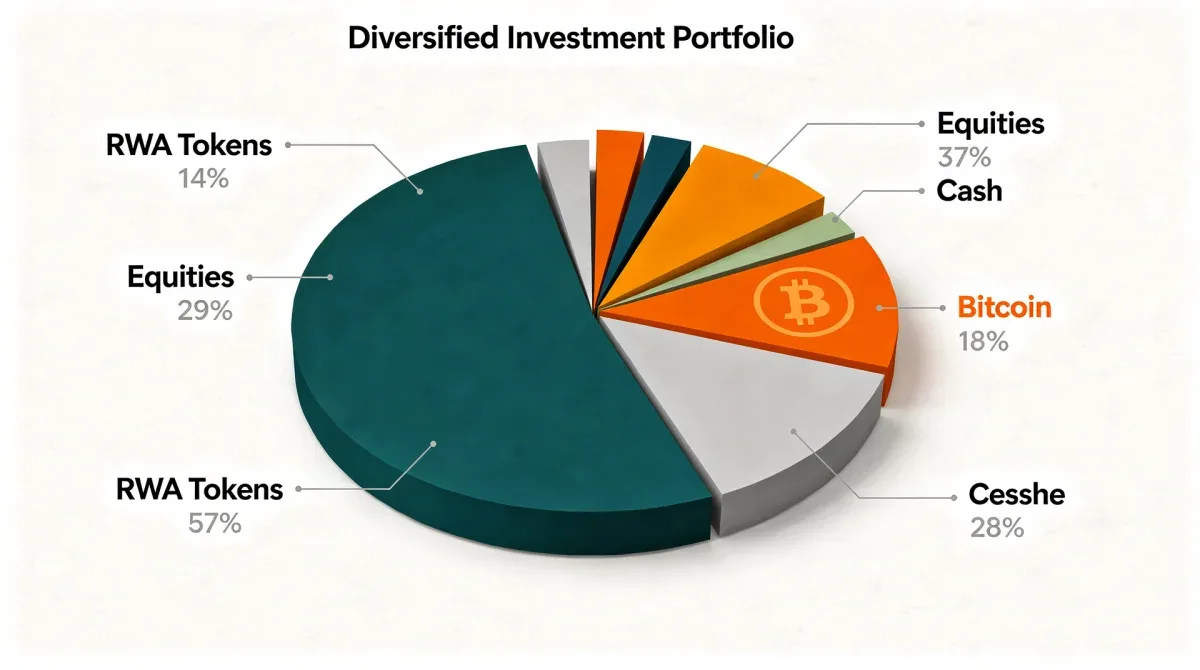
Consider the following benefits of this strategic move:
- Reduced Portfolio Volatility: Real estate, private credit, and other RWAs typically have lower price fluctuations than Bitcoin.
- Diversified Risk Exposure: Spreads risk across different asset classes, reducing concentration risk in a single, volatile asset.
- Potential for Yield Generation: Many RWA tokens can offer yield through underlying asset cash flows (e.g., rent from tokenized real estate, interest from tokenized loans).
- Inflation Hedge: Certain RWAs, like real estate or commodities, can act as a hedge against inflation.
This strategic shift is not about abandoning Bitcoin, but rather about optimizing a portfolio for long-term growth and stability in an increasingly complex financial world. It acknowledges Bitcoin's foundational role while embracing the expanding opportunities presented by tokenized real assets.

Ultimately, the 30% reallocation is a forward-looking strategy designed to capture the best of both worlds: the innovative potential of blockchain technology coupled with the stability and intrinsic value of real-world assets. It's about building a more resilient and higher-performing portfolio for the future.
Projected Performance of RWA Tokens by 2026
The trajectory for Real-World Asset (RWA) tokens by 2026 is overwhelmingly positive, with many analysts predicting significant growth and widespread adoption. This optimistic outlook is based on several converging factors, including increasing institutional interest, regulatory clarity, and the maturation of underlying blockchain infrastructure. As more traditional assets are brought on-chain, the market capitalization and liquidity of RWA tokens are expected to surge.
Industry reports and expert forecasts suggest that the RWA market could reach trillions of dollars in value within the next few years. This expansion will be fueled by both the tokenization of existing assets and the creation of new financial products built around these digital representations. The utility and efficiency gains offered by RWA tokens are simply too compelling for traditional finance to ignore.
Factors driving RWA token growth
Several key drivers underpin the projected superior performance of RWA tokens compared to a pure Bitcoin strategy. These factors highlight the fundamental advantages that tokenized real assets bring to the investment landscape.
- Institutional Adoption: Major financial institutions are actively exploring and launching RWA tokenization initiatives, bringing significant capital and credibility.
- Regulatory Frameworks: Governments worldwide are developing clearer regulations for digital assets, which will provide greater certainty and encourage broader participation.
- Technological Advancements: Improved blockchain scalability, security, and interoperability make RWA tokenization more efficient and reliable.
- Demand for Yield: In a low-interest-rate environment, the potential for yield generation from tokenized real assets is highly attractive to investors seeking income.
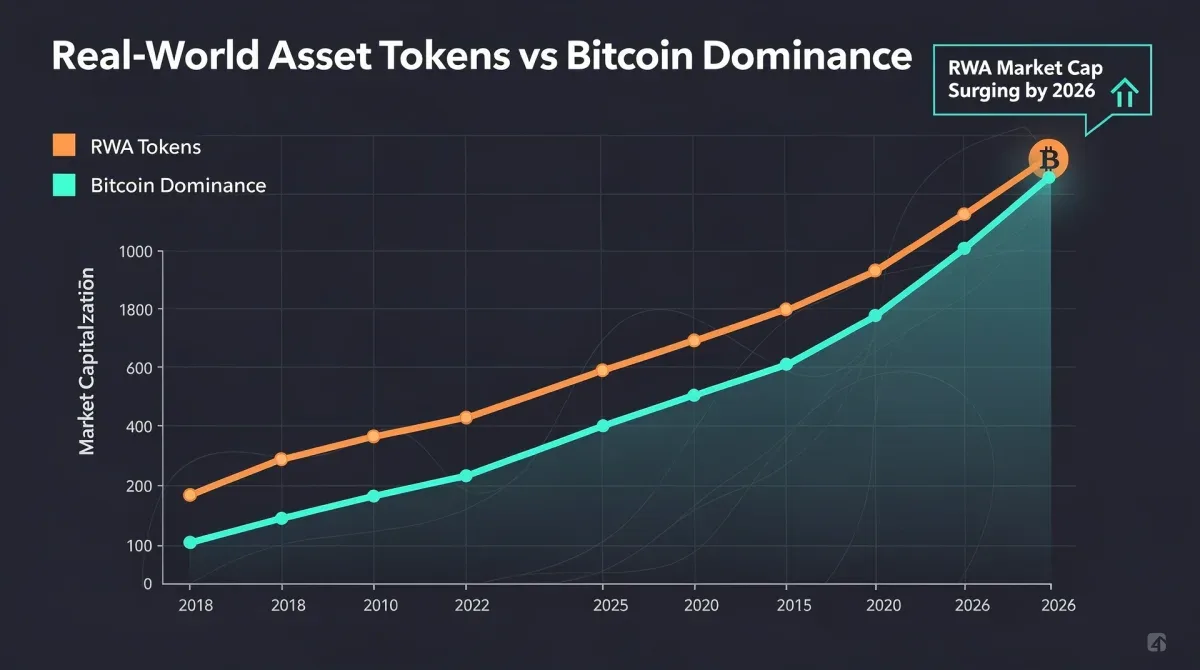
These drivers create a powerful tailwind for RWA tokens, positioning them for substantial capital appreciation and robust performance. While Bitcoin's growth may continue, it is unlikely to match the exponential growth potential of a nascent, yet fundamentally strong, asset class like RWAs that are tapping into trillions of dollars of illiquid assets.
Therefore, by 2026, a portfolio with a strategic allocation to RWA tokens is likely to demonstrate a more favorable risk-adjusted return profile, outperforming a portfolio solely reliant on Bitcoin's market movements. This makes the Bitcoin dominance shift a compelling narrative for savvy investors.
Implementing the Reallocation Strategy
Implementing a reallocation strategy from Bitcoin to Real-World Asset (RWA) tokens requires careful planning and a thorough understanding of the available options. It's not simply about selling BTC and buying any RWA token; it involves due diligence, risk assessment, and selecting the right platforms and assets that align with individual investment goals. The process should be gradual and methodical, rather than a sudden, impulsive move.
Investors should begin by identifying reputable platforms that facilitate RWA tokenization and trading. These platforms often specialize in specific types of assets, such as real estate, fine art, or private credit. Understanding the regulatory compliance and security measures of these platforms is paramount to protecting your investment.
Key considerations for investors
Before executing the reallocation, several critical factors need to be considered to ensure a successful and secure transition into RWA tokens.
- Due Diligence on RWA Projects: Research the underlying assets, the legal frameworks, the project team, and the tokenomics of each RWA token.
- Platform Selection: Choose reputable, regulated platforms with strong security protocols and a transparent operational history.
- Diversification within RWAs: Don't put all your RWA eggs in one basket; diversify across different types of real-world assets and projects.
- Risk Assessment: Understand the specific risks associated with each RWA token, including liquidity risk, counterparty risk, and regulatory risk.
- Tax Implications: Consult with a tax professional to understand the tax implications of selling BTC and acquiring RWA tokens in your jurisdiction.
A phased approach to reallocation can help mitigate market timing risks. Instead of a single large transaction, consider reallocating a smaller percentage over several months. This allows you to average into RWA positions and react to market changes more flexibly.
The goal is to build a diversified portfolio that leverages the unique benefits of RWA tokens while maintaining a strategic exposure to Bitcoin. This balanced approach is key to outperforming in the evolving crypto landscape of 2026 and beyond.
Risks and Challenges in RWA Token Adoption
While the potential of Real-World Asset (RWA) tokens is immense, it's crucial to acknowledge the inherent risks and challenges associated with their adoption. Like any emerging asset class, RWAs are subject to various uncertainties that investors must carefully evaluate. A clear understanding of these hurdles is essential for making informed investment decisions and mitigating potential downsides.
One of the primary challenges lies in the complex interplay between traditional legal frameworks and decentralized blockchain technology. Ensuring that the digital representation of an asset holds legal standing in the physical world requires robust legal structures, clear regulatory guidelines, and reliable enforcement mechanisms. Without these, the entire premise of RWA tokenization can be undermined.
Navigating the complexities of a new asset class
Investors must be aware of several specific risks when considering RWA tokens. These are distinct from the risks associated with purely digital cryptocurrencies and often involve a blend of traditional and blockchain-specific challenges.
- Regulatory Uncertainty: The legal landscape for RWA tokens is still evolving, posing risks of sudden regulatory changes or bans in certain jurisdictions.
- Custodial Risk: The underlying physical assets often require third-party custodians, introducing counterparty risk.
- Valuation Challenges: Valuing illiquid real-world assets for tokenization can be complex and subjective.
- Smart Contract Vulnerabilities: Like all blockchain applications, RWA token platforms are susceptible to smart contract bugs and hacks.
- Liquidity Issues: While tokenization aims to increase liquidity, certain niche RWA tokens may still suffer from low trading volumes.
Addressing these challenges requires a collaborative effort from regulators, technology developers, and legal experts. As the RWA sector matures, we can expect to see more standardized legal frameworks, more secure platforms, and greater clarity around valuation methodologies. However, early adopters must proceed with caution and thorough due diligence.
Despite these challenges, the long-term trend towards RWA token adoption appears inevitable due to the efficiency and accessibility it offers. Investors who are prepared to navigate these complexities stand to benefit significantly from this transformative shift in asset management.
The Future of Crypto Portfolios: Beyond Bitcoin
The future of crypto portfolios is undeniably moving beyond a sole reliance on Bitcoin. While Bitcoin will continue to hold a significant place as a foundational digital asset, the broader ecosystem is expanding rapidly, offering a diverse array of investment opportunities. The strategic reallocation towards Real-World Asset (RWA) tokens is a testament to this evolving landscape, signaling a more mature and diversified approach to digital asset management.
As the market matures, investors will increasingly prioritize risk-adjusted returns, stability, and tangible utility over purely speculative growth. This shift will naturally lead to a more balanced portfolio construction, where assets like RWA tokens play a crucial role in providing diversification and exposure to traditional economic drivers within a decentralized framework.
Building a resilient and diversified digital asset strategy
A resilient crypto portfolio in 2026 and beyond will likely feature a blend of established digital assets, emerging utility tokens, and a strong allocation to RWA tokens. This multi-faceted approach aims to capture growth from various sectors while mitigating the concentrated risks associated with single-asset exposure.
Consider the following elements for a future-proof crypto portfolio:
- Core Bitcoin Holding: Retain a foundational BTC position for its store-of-value properties and continued market influence.
- Strategic RWA Allocation: Integrate RWA tokens for diversification, stability, and potential yield from real-world assets.
- Exposure to Emerging Sectors: Allocate a smaller portion to high-growth areas like specialized layer-1s, DeFi innovations, or AI-driven blockchain projects.
- Regular Rebalancing: Periodically adjust portfolio allocations to maintain desired risk exposure and capitalize on market shifts.
The integration of RWA tokens represents a pivotal moment in the evolution of crypto investing. It signifies a convergence of traditional finance with decentralized technology, creating a more robust and accessible global financial system. Investors who embrace this shift and strategically diversify their holdings will be best positioned to thrive in the coming years.
Ultimately, the future of crypto portfolios is about smart, informed diversification. The Bitcoin dominance shift into RWA tokens is not just a trend; it's a strategic imperative for optimizing returns and building a resilient portfolio in the dynamic digital asset economy.
| Key Point | Brief Description |
|---|---|
| Bitcoin Dominance Shift | Market expansion leads to diversification beyond Bitcoin, challenging its historical market share. |
| Rise of RWA Tokens | Digital representations of real-world assets offering liquidity, fractional ownership, and transparency. |
| 30% Reallocation Justification | Mitigates volatility, diversifies risk, and offers yield potential by balancing BTC with RWA tokens. |
| Outperformance by 2026 | RWA tokens projected to outperform pure BTC strategies due to institutional adoption and market maturation. |
Frequently Asked Questions About RWA Tokens and Bitcoin
What exactly are Real-World Asset (RWA) tokens?▼RWA tokens are digital representations of tangible or intangible assets from the physical world, such as real estate, fine art, or commodities, issued on a blockchain. They aim to bring liquidity and fractional ownership to traditionally illiquid assets, bridging conventional finance with decentralized ecosystems.
Why should I consider reallocating Bitcoin to RWA tokens?▼Reallocating a portion of Bitcoin to RWA tokens helps diversify your portfolio, reduce overall volatility, and potentially generate yield from underlying real assets. This strategy aims to optimize risk-adjusted returns by combining crypto innovation with the stability of real-world assets.
What are the main risks associated with RWA tokens?▼Key risks include regulatory uncertainty, custodial risk of the underlying physical assets, valuation challenges for illiquid assets, potential smart contract vulnerabilities, and in some cases, limited liquidity. Thorough due diligence and understanding of legal frameworks are crucial for investors.
How will RWA tokens outperform Bitcoin by 2026?▼RWA tokens are projected to outperform due to increasing institutional adoption, clearer regulatory frameworks, technological advancements, and high demand for yield-generating assets. Their ability to tap into trillions of dollars of illiquid assets positions them for significant growth as the market matures and integrates.
Is this reallocation strategy suitable for all investors?▼This strategy is generally more suitable for investors seeking diversification and a balanced approach to crypto investing, particularly those comfortable with emerging asset classes and their associated risks. It requires careful research and understanding of both Bitcoin and RWA token markets, and may not be ideal for those seeking purely speculative high-risk, high-reward plays.
Conclusion
The evolving cryptocurrency landscape demands a sophisticated and forward-thinking approach to portfolio management. The projected Bitcoin dominance shift, driven by the emergence and rapid growth of Real-World Asset (RWA) tokens, presents a compelling case for strategic reallocation. By moving 30% of Bitcoin holdings into RWA tokens, investors can achieve a more diversified, resilient, and potentially higher-performing portfolio by 2026. This strategy is not about abandoning Bitcoin but rather about optimizing investment exposure to capitalize on the convergence of traditional finance and decentralized technology. While challenges and risks exist, the benefits of increased liquidity, fractional ownership, and yield generation offered by RWA tokens position them as a pivotal component of future-proof crypto portfolios. Embracing this shift will be key to navigating the complexities and capturing the vast opportunities within the digital asset economy.
