Why 62% of US Institutional Crypto Liquidity Is Rotating Into Tokenized Treasury Bills This Quarter
Institutional crypto liquidity is dramatically shifting, with 62% now moving into tokenized treasury bills this quarter due to enhanced security, regulatory clarity, and attractive yields in a volatile market, reshaping the landscape of digital asset investments.
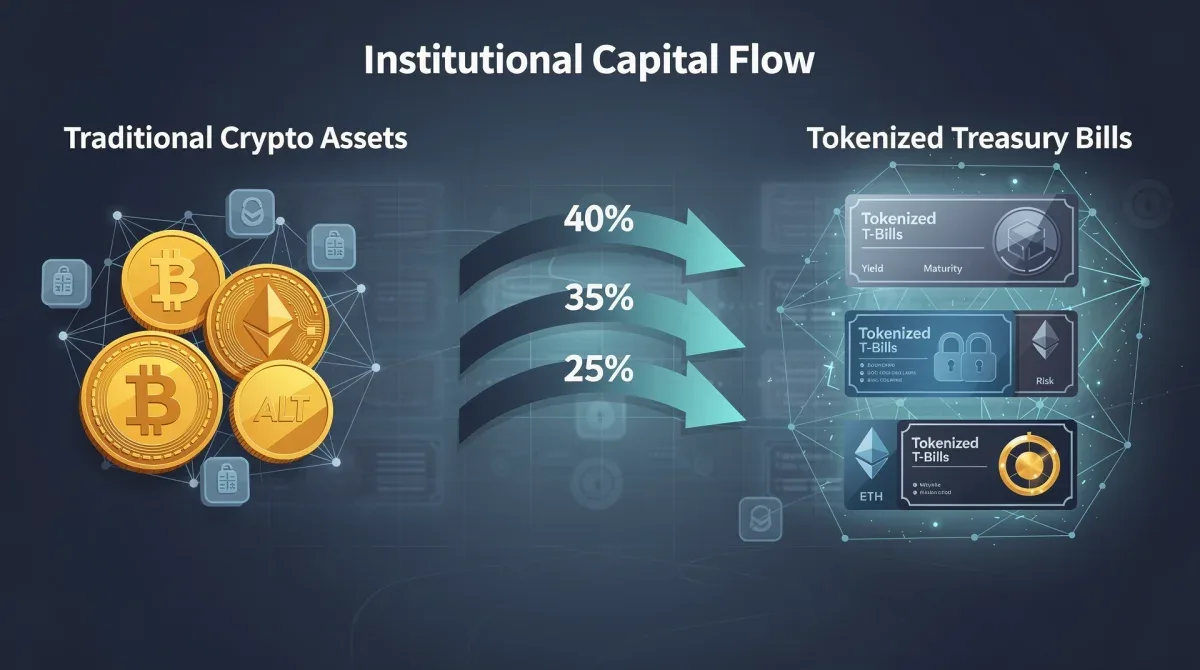
The financial landscape is witnessing a significant pivot, as an estimated 62% of US institutional crypto liquidity is rotating into tokenized treasury bills this quarter. This substantial shift signals a maturing market where traditional finance instruments are finding new life on the blockchain, offering institutions a blend of stability, yield, and digital efficiency.
The evolving landscape of institutional crypto investment
The world of institutional cryptocurrency investment is far from static. What began as a speculative frontier has steadily evolved into a sophisticated ecosystem, demanding more stability and regulatory clarity. Institutions, driven by fiduciary duties and risk management principles, are constantly seeking avenues that offer both growth potential and capital preservation.
This ongoing evolution has seen a gradual shift from highly volatile, pure-play crypto assets towards more stable, yield-generating instruments. The recent surge in interest for tokenized treasury bills is a natural progression of this trend, reflecting a deeper integration of traditional financial products within the digital asset sphere.
Understanding the institutional investor mindset
Institutional investors operate under stringent guidelines, prioritizing security, regulatory compliance, and predictable returns. Their entry into the crypto space has always been cautious, often limited to well-established assets or structured products that mitigate some of the inherent volatility. The appeal of tokenized treasury bills lies precisely in their ability to bridge this gap, offering a familiar, low-risk asset class within a novel, efficient framework.
- Risk aversion: Institutions typically avoid excessive exposure to highly volatile assets, favoring predictable returns.
- Regulatory clarity: A defined legal and regulatory framework is crucial for large-scale institutional adoption.
- Yield generation: The ability to generate consistent, reliable yield is a primary driver for capital allocation.
The shift highlights a growing confidence in the underlying blockchain technology, not just as a medium for speculative assets, but as a robust infrastructure for delivering traditional financial services more efficiently. This foundational trust is paramount for institutions looking to allocate significant capital.
Drivers behind the rotation: security, yield, and regulation
Several compelling factors are converging to propel this significant rotation of institutional crypto liquidity into tokenized treasury bills. At the forefront are enhanced security, attractive yields in a high-interest rate environment, and a growing sense of regulatory clarity. These elements collectively address many of the concerns that have historically kept institutional investors on the sidelines of the broader crypto market.
Security in the context of tokenized assets refers not only to the cryptographic integrity of the tokens but also to the underlying backing by government-issued debt. This combination offers a level of assurance that pure-play cryptocurrencies often cannot match. Furthermore, the yields offered by treasury bills, particularly in the current macroeconomic climate, present a compelling alternative to the often-unpredictable returns of other digital assets.
The appeal of stable, government-backed assets
Treasury bills are considered one of the safest investments globally, backed by the full faith and credit of the US government. Tokenizing these assets brings their inherent stability and reliability to the blockchain, making them accessible within the crypto ecosystem without sacrificing their core characteristics. This stability is a key draw for institutions seeking to de-risk their digital asset portfolios while still participating in the evolving financial landscape.
- Sovereign backing: The ultimate assurance of repayment, minimizing credit risk.
- Low volatility: Price stability compared to most cryptocurrencies, offering capital preservation.
- Market depth: A highly liquid and mature market for underlying treasury bills ensures easy entry and exit.
The ability to hold a virtually risk-free asset in a tokenized form on a blockchain opens up new possibilities for collateralization, lending, and other decentralized finance (DeFi) applications, all while maintaining a strong link to traditional financial stability.
Regulatory clarity and institutional adoption
One of the most significant hurdles for institutional engagement in the crypto space has always been the lack of clear and consistent regulation. This uncertainty creates legal and operational risks that most regulated entities are unwilling to bear. However, the landscape is slowly but surely evolving, with tokenized treasury bills benefiting from a clearer regulatory path.

Regulators tend to view tokenized versions of existing, regulated securities with less apprehension than novel, unregulated crypto assets. This distinction is crucial for institutions, as it provides a framework within which they can operate with greater confidence. The ability to categorize and manage these assets within established regulatory paradigms significantly de-risks their adoption.
The role of regulated platforms and custodians
The emergence of regulated platforms and custodians specializing in tokenized securities further bolsters institutional confidence. These entities provide the necessary infrastructure for secure issuance, trading, and custody of tokenized treasury bills, adhering to established financial regulations. Their involvement ensures that institutions can engage with these assets in a compliant and secure manner.
- Licensed custodians: Offer secure storage solutions that meet institutional compliance standards.
- Regulated exchanges: Provide transparent and fair trading environments for tokenized assets.
- Auditing and reporting: Facilitate adherence to financial reporting and auditing requirements.
The regulatory clarity surrounding tokenized assets, particularly those backed by traditional securities, is a critical enabler for institutional adoption. It allows these sophisticated investors to integrate digital assets into their existing portfolios and risk management frameworks without venturing into uncharted regulatory territory.
Economic incentives: attractive yields in a high-interest environment
Beyond security and regulation, the economic incentives are undeniably powerful. In an environment characterized by persistent inflation and central banks maintaining higher interest rates, the yields offered by treasury bills have become increasingly attractive. Tokenizing these bills allows institutions to access these yields with the added benefits of blockchain technology, such as faster settlement and increased liquidity.
The ability to earn a stable, risk-free rate of return on a digital asset is a game-changer for institutions holding significant crypto liquidity. Instead of letting capital sit idle or be exposed to high volatility, tokenized treasury bills offer a productive, low-risk deployment option that aligns with traditional investment strategies.
Comparing yields: tokenized vs. traditional crypto assets
While some decentralized finance (DeFi) protocols offer high yields, they often come with significant smart contract risk, impermanent loss, and regulatory uncertainty. Tokenized treasury bills, on the other hand, offer yields that are directly tied to the US government's borrowing rates, providing a predictable and secure income stream.
- Predictable income: Treasury bill yields are known at the time of purchase, offering certainty.
- Lower risk profile: Eliminates many of the risks associated with volatile crypto-native yields.
- Capital efficiency: Allows institutions to earn yield on capital that would otherwise be less productive.
This economic advantage, combined with the other benefits, makes a compelling case for institutions to reallocate a substantial portion of their crypto holdings into these tokenized instruments, optimizing their returns while managing risk.
Technological advantages: efficiency and interoperability
The underlying blockchain technology brings significant operational efficiencies and enhanced interoperability to the realm of treasury bills. Tokenization streamlines processes that are traditionally manual and time-consuming, such as issuance, transfer, and settlement. This efficiency translates into lower costs and faster transaction times, which are highly valued by institutional players.
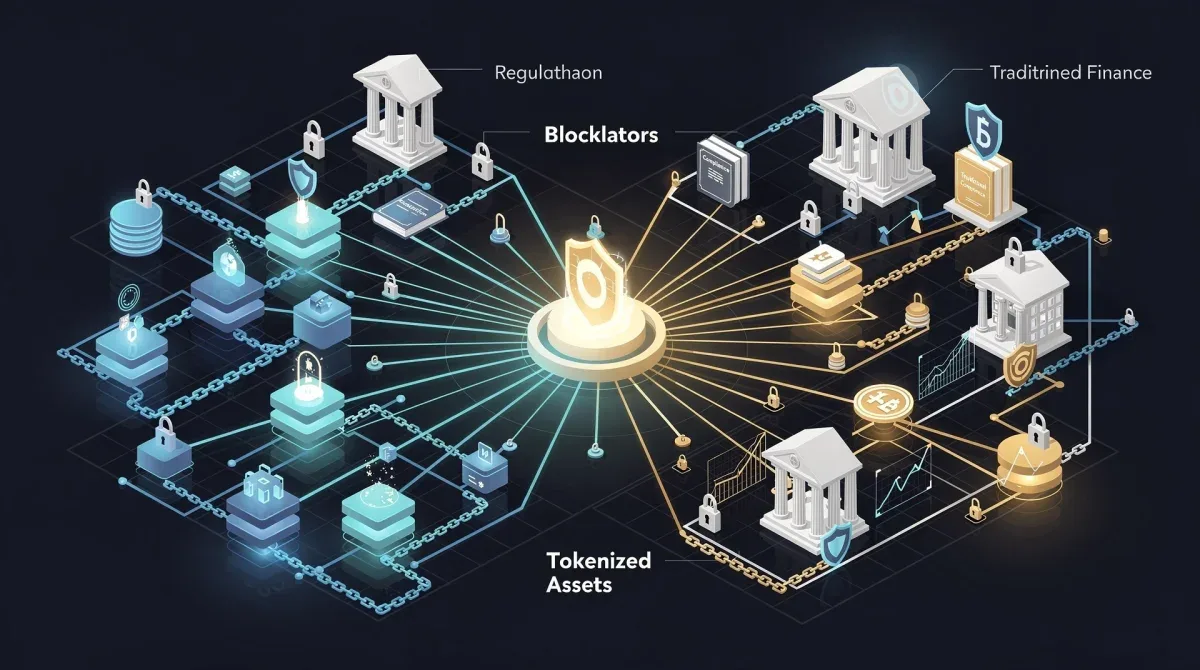
Furthermore, tokenized treasury bills can seamlessly integrate into various blockchain-based applications and platforms, enhancing their utility within the broader digital asset ecosystem. This interoperability allows for novel financial products and services to be built around these stable assets, expanding their potential use cases beyond simple investment.
Streamlined operations and global access
Blockchain technology enables 24/7 trading and near-instant settlement, a stark contrast to the traditional financial markets' limited operating hours and multi-day settlement cycles. This always-on nature provides institutions with greater flexibility and liquidity management capabilities, especially for global operations.
- Instant settlement: Reduces counterparty risk and frees up capital faster.
- Fractional ownership: Enables smaller investment amounts, increasing accessibility.
- Automated processes: Smart contracts can automate interest payments and redemptions, reducing manual overhead.
The technological leap offered by tokenization transforms a traditional, somewhat cumbersome asset into a highly efficient and versatile digital instrument, perfectly suited for the demands of modern institutional finance.
Future implications for the crypto market
The rotation of such a significant portion of institutional crypto liquidity into tokenized treasury bills is not merely a transient trend; it carries profound implications for the future direction of the entire crypto market. This shift suggests a maturation of the digital asset space, moving beyond pure speculation towards a more integrated and diversified financial ecosystem. It signals a future where traditional and decentralized finance converge, creating hybrid models that leverage the best of both worlds.
This institutional embrace of tokenized real-world assets (RWAs) could pave the way for a broader adoption of blockchain technology across various asset classes. As more traditional assets become tokenized, the distinction between "crypto" and "traditional" finance may blur, leading to a more unified global financial system. The increased liquidity and stability brought by these assets could also reduce overall market volatility, making the crypto space more appealing to a wider range of investors.
The rise of hybrid finance (HyFi) models
This trend is a strong indicator of the emergence of Hybrid Finance (HyFi), where the transparency and efficiency of blockchain meet the regulatory compliance and stability of traditional finance. Tokenized treasury bills are a prime example of HyFi in action, bridging the gap between two previously disparate financial paradigms. This model offers institutions the best of both worlds: access to digital asset innovation without abandoning established financial principles.
- Increased capital efficiency: Unlocking liquidity from traditional assets for use in digital markets.
- Enhanced transparency: Blockchain's immutable ledger provides unparalleled visibility.
- Broader investor base: Attracting traditional investors who were previously hesitant about crypto.
The future crypto market will likely feature a more diverse array of assets, with tokenized securities playing a pivotal role in providing stability, yield, and a bridge for mainstream institutional capital. This integration will foster a more robust and resilient digital financial ecosystem.
| Key Point | Brief Description |
|---|---|
| Institutional Shift | 62% of US institutional crypto liquidity is moving to tokenized treasury bills this quarter. |
| Key Drivers | Security, attractive yields, and increasing regulatory clarity are primary motivators. |
| Technological Benefits | Blockchain offers efficiency, faster settlement, and enhanced interoperability for these assets. |
| Future Impact | Suggests a maturation of the crypto market and the rise of Hybrid Finance (HyFi) models. |
Frequently asked questions
What are tokenized treasury bills?▼Tokenized treasury bills are digital representations of traditional US Treasury bills on a blockchain. They maintain the security and backing of government debt while leveraging blockchain's efficiency for ownership, transfer, and settlement, offering institutions a stable, yield-bearing digital asset.
Why are institutions rotating crypto liquidity into them?▼Institutions are seeking greater stability, predictable yields in a high-interest rate environment, and clearer regulatory frameworks. Tokenized treasury bills offer a low-risk, government-backed asset class within the digital ecosystem, aligning with institutional risk management and compliance needs.
What are the main benefits of tokenized treasury bills for institutions?▼Key benefits include enhanced security through sovereign backing, attractive and stable yields, operational efficiencies like faster settlement, and improved interoperability within the digital asset space, all while operating under a clearer regulatory lens.
How does this affect the broader cryptocurrency market?▼This rotation signifies a maturation of the crypto market, fostering greater integration with traditional finance. It could lead to reduced volatility, increased institutional participation in tokenized real-world assets, and the rise of hybrid finance models, broadening the appeal of digital assets.
Are tokenized treasury bills regulated?▼While the underlying treasury bills are highly regulated, the tokenized versions are gaining clearer regulatory pathways. Regulators often view them as digital representations of existing securities, which simplifies compliance compared to novel, unregulated crypto assets, encouraging institutional adoption.
Conclusion
The significant rotation of institutional crypto liquidity into tokenized treasury bills underscores a pivotal moment in the digital asset landscape. This shift reflects a growing demand for stability, regulatory assurance, and attractive yields within the efficiency of blockchain technology. As institutions increasingly embrace these hybrid financial instruments, the boundaries between traditional and decentralized finance will continue to blur, paving the way for a more mature, integrated, and resilient global financial ecosystem. This trend is not merely a short-term reallocation but a foundational change shaping the future of digital asset investment.
