DCA vs. Dynamic Rebalancing: Crypto Strategy Showdown
Comparing Dollar-Cost Averaging (DCA) against dynamic 90-day rebalancing reveals that while DCA offers simplicity and reduces market timing risk, dynamic rebalancing seeks to optimize risk-adjusted returns by actively adjusting portfolio allocations to capitalize on market volatility.
When navigating the turbulent waters of cryptocurrency markets, investors often grapple with fundamental questions about strategy. Specifically, comparing DCA vs. Dynamic 90-Day Rebalancing: Which Crypto Strategy Delivers Superior Risk-Adjusted Returns Right Now? is a critical inquiry for those aiming to optimize their portfolios.
Understanding Dollar-Cost Averaging (DCA) in Crypto
Dollar-Cost Averaging, or DCA, stands as one of the most widely adopted and often recommended strategies for investors entering volatile markets like cryptocurrency. At its core, DCA involves investing a fixed amount of money at regular intervals, regardless of the asset's price. This systematic approach aims to reduce the impact of market volatility on the overall purchase price. Instead of attempting to time the market, which is notoriously difficult even for seasoned professionals, DCA smooths out the entry points.
The principle behind DCA is straightforward: by investing consistently over time, you buy more assets when prices are low and fewer when prices are high. This automatically leads to a lower average cost per unit over the long term, assuming the asset's value generally trends upwards. For many, the psychological benefit of DCA is immense; it removes the emotional burden of trying to predict market movements, fostering discipline and reducing the risk of making impulsive decisions driven by fear or greed. This passive yet powerful strategy has gained considerable traction among retail crypto investors due to its simplicity and effectiveness in mitigating short-term price swings.
The Mechanics of DCA in Practice
Implementing DCA in a crypto portfolio is relatively simple. An investor might decide to invest $100 into Bitcoin every week or $500 into Ethereum every month. This schedule is maintained regardless of whether Bitcoin is trading at $30,000 or $70,000, or Ethereum at $1,500 or $4,000. Automated investment platforms and exchanges have made this process even easier, allowing users to set up recurring buys, which execute automatically on a chosen schedule. This automation ensures adherence to the strategy, removing the temptation to deviate during periods of market exuberance or panic. The regularity of investment is key to DCA’s success, ensuring that the investor captures various price points over an extended period.
- Reduced Market Timing Risk: DCA eliminates the need to predict market bottoms or tops, which is an almost impossible task.
- Psychological Comfort: It removes emotional decision-making, promoting a disciplined investment approach.
- Average Cost Reduction: Over time, the average purchase price per unit tends to be lower than if all capital were invested at once during a market peak.
- Accessibility: Suitable for investors with limited capital, as it allows gradual entry into the market.
While DCA is often lauded for its simplicity and risk-mitigation properties, it is not without its limitations. In a consistently rising market, a lump-sum investment made early on would likely outperform DCA, as the investor would have more capital exposed to the upward trend from the start. However, given the inherent volatility and unpredictable nature of cryptocurrency markets, such consistently rising environments are rare and often punctuated by significant corrections. Therefore, for most long-term crypto investors, DCA provides a pragmatic and less stressful path to wealth accumulation. It focuses on consistent accumulation rather than speculative gains, aligning with a more conservative, yet potentially rewarding, investment philosophy in the digital asset space.
Exploring Dynamic 90-Day Rebalancing
In contrast to the passive nature of DCA, dynamic 90-day rebalancing represents a more active management strategy. This approach involves periodically adjusting a portfolio's asset allocation back to its original or target weights. The 'dynamic' aspect refers to the active decision-making process involved in these adjustments, which are typically triggered by time intervals or specific market conditions. For the purpose of this discussion, we are focusing on a fixed 90-day interval, meaning the portfolio is reviewed and rebalanced every three months. This strategy is rooted in the principle of 'buy low, sell high' by trimming positions that have grown excessively and adding to those that have underperformed, thereby maintaining a desired risk profile and asset allocation.
The core objective of dynamic rebalancing is to control risk and capture profits. When certain assets in a portfolio perform exceptionally well, their proportion within the total portfolio grows. This can inadvertently increase the portfolio's exposure to that specific asset and, consequently, its risk. By rebalancing, an investor sells a portion of the outperforming asset, taking profits, and uses those funds to buy more of the underperforming assets, bringing the portfolio back to its target allocation. This systematic approach ensures that the investor is always aligned with their initial investment thesis and risk tolerance, preventing a drift into an overly concentrated or risky position. The 90-day cycle provides a consistent rhythm for these adjustments, allowing investors to capitalize on market movements without constantly monitoring their holdings.
Mechanism and Benefits of Regular Rebalancing
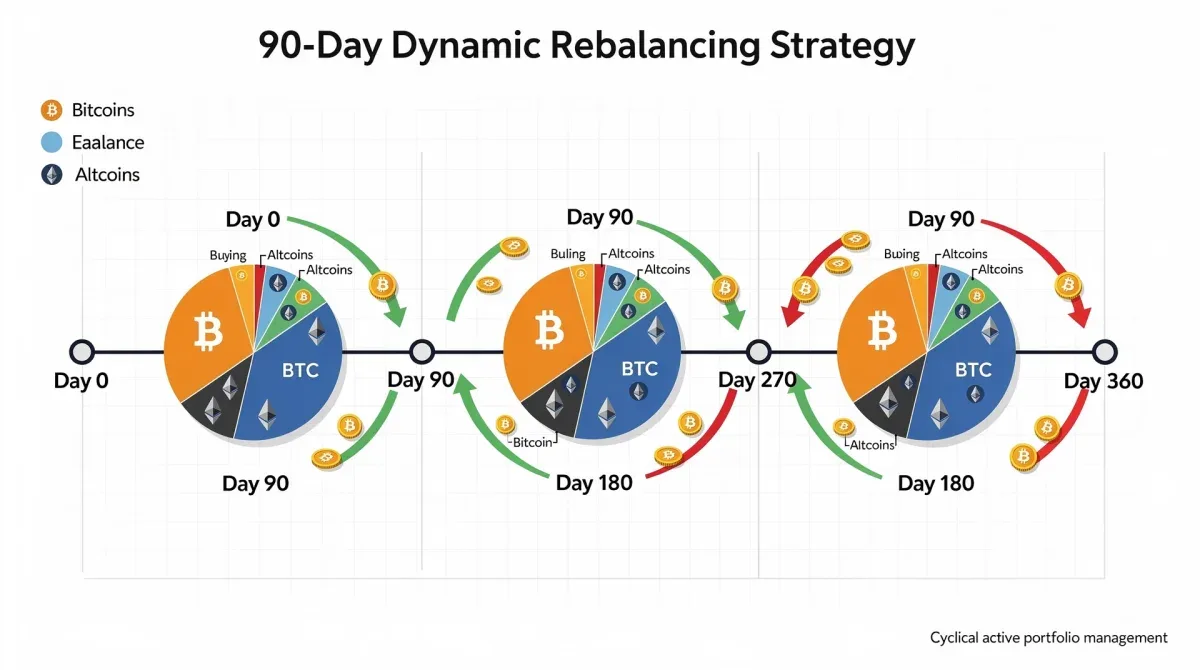
A typical dynamic 90-day rebalancing process begins with establishing target percentages for each cryptocurrency in the portfolio. For instance, an investor might aim for 50% Bitcoin, 30% Ethereum, and 20% other altcoins. Every 90 days, they would assess the current percentages. If Bitcoin has surged to 60% of the portfolio, they would sell 10% of their Bitcoin holdings and redistribute those funds to bring Ethereum and altcoins back to their target weights. This forced selling of winners and buying of losers can feel counterintuitive, but it is precisely how the strategy enforces discipline and risk management. It prevents overexposure to any single asset and ensures diversification remains intact, which is crucial in the highly volatile crypto market.
- Risk Management: Helps maintain a desired risk profile by preventing any single asset from dominating the portfolio.
- Profit Taking: Systematically sells high-performing assets, locking in gains.
- Buying Opportunities: Forces the investor to buy more of underperforming assets, potentially acquiring them at lower prices.
- Discipline: Imposes a structured approach to portfolio management, reducing emotional trading.
While dynamic rebalancing offers clear advantages in terms of risk management and disciplined profit-taking, it also comes with its own set of challenges. Transaction fees can accumulate over time, especially in highly liquid and frequently rebalanced portfolios. Moreover, there are tax implications to consider, as selling assets to rebalance can trigger capital gains events. These factors necessitate careful planning and consideration of the specific tax laws in one's jurisdiction. Despite these considerations, for investors seeking a more hands-on approach to manage risk and potentially enhance returns in a fluctuating market, dynamic 90-day rebalancing offers a robust framework. It provides a structured way to respond to market changes, rather than simply enduring them, which is a key differentiator from passive strategies like DCA.
Risk-Adjusted Returns: A Critical Metric
When evaluating investment strategies, simply looking at raw returns can be misleading. A strategy might yield high returns but expose the investor to an unacceptably high level of risk. This is where the concept of risk-adjusted returns becomes paramount. Risk-adjusted returns measure the return of an investment relative to the amount of risk taken. It helps investors understand if they are being adequately compensated for the risks they are assuming. In the context of highly volatile assets like cryptocurrencies, this metric is even more crucial, as large swings in price can significantly impact a portfolio's value.

Several metrics are used to calculate risk-adjusted returns, with the Sharpe Ratio and Sortino Ratio being among the most popular. The Sharpe Ratio measures the excess return per unit of total risk (volatility), while the Sortino Ratio focuses specifically on downside risk (negative volatility). A higher Sharpe or Sortino Ratio generally indicates a better risk-adjusted return, suggesting that the investor is achieving more return for each unit of risk taken. For crypto investors, understanding these metrics is vital for making informed decisions about which strategy, DCA or dynamic rebalancing, aligns best with their personal risk tolerance and financial goals. It's not just about how much money you make, but how much risk you undertake to make it.
Key Risk-Adjusted Metrics Explained
To truly assess the effectiveness of DCA vs. Dynamic 90-Day Rebalancing, we must delve into the specifics of risk-adjusted return calculations. The Sharpe Ratio, for instance, is calculated by subtracting the risk-free rate from the portfolio's return and then dividing the result by the portfolio's standard deviation (a measure of volatility). A higher Sharpe Ratio implies that the portfolio is generating more return for each unit of risk. The Sortino Ratio is similar but uses only the downside deviation in the denominator, making it particularly useful for investors concerned primarily with negative volatility. These metrics provide a standardized way to compare different strategies, moving beyond anecdotal evidence to quantitative analysis.
- Sharpe Ratio: Measures return per unit of total risk (volatility). A higher ratio is better.
- Sortino Ratio: Measures return per unit of downside risk, focusing on negative volatility. A higher ratio is better.
- Maximum Drawdown: The largest peak-to-trough decline in a portfolio during a specific period, indicating potential capital loss.
- Volatility: A statistical measure of the dispersion of returns for a given security or market index.
In the volatile crypto market, a strategy that minimizes maximum drawdown while still achieving respectable returns is often highly valued. Investors want to avoid significant capital erosion during bear markets, even if it means sacrificing some upside during bull runs. Therefore, when analyzing DCA and dynamic rebalancing, it's essential to consider not just their average returns but also their behavior during market downturns. A strategy that provides a smoother equity curve with fewer deep drawdowns, even if its absolute returns are slightly lower, might offer superior risk-adjusted returns for many investors, especially those with a lower risk tolerance. This comprehensive view allows for a more robust comparison and a more informed decision-making process.
DCA vs. Dynamic Rebalancing: A Direct Comparison
The fundamental difference between DCA and dynamic 90-day rebalancing lies in their underlying philosophy: passive accumulation versus active management. DCA is a set-it-and-forget-it approach, ideal for long-term investors who prioritize simplicity and want to minimize the emotional toll of market fluctuations. It assumes that over time, the market will trend upwards, and consistent contributions will average out the purchase price. Dynamic rebalancing, on the other hand, is proactive. It acknowledges market volatility and aims to exploit it by systematically selling assets that have performed well and buying those that have performed poorly, all while maintaining a target asset allocation. Each strategy caters to different investor profiles and market outlooks.
From a practical standpoint, DCA requires minimal oversight once set up. It’s perfect for those who prefer to spend less time managing their investments and more time on other pursuits. The consistent nature of DCA also instills discipline, preventing impulsive decisions that often plague individual investors. Dynamic rebalancing, while still systematic, demands more attention. Investors must periodically review their portfolio, calculate deviations from target allocations, and execute trades. This requires a greater understanding of market dynamics, transaction costs, and potential tax implications. However, this increased effort can potentially lead to enhanced risk-adjusted returns by actively managing exposure and capitalizing on market cycles.
Performance and Volatility Considerations
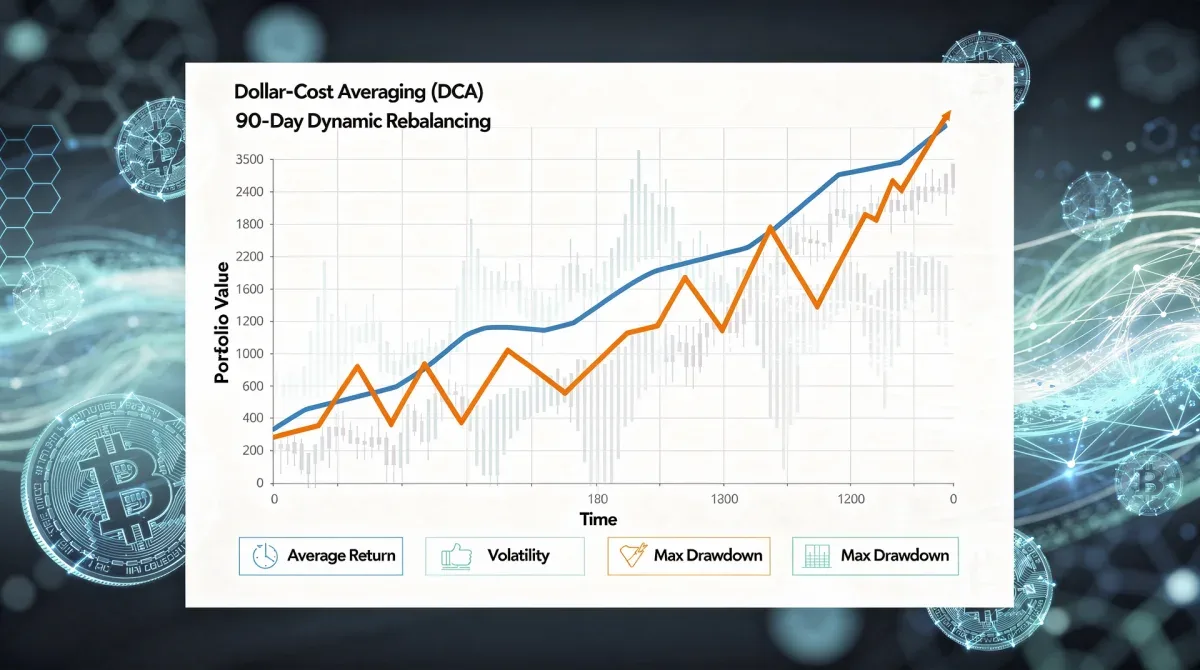
Simulations and historical data often show varied results for these two strategies, largely dependent on the market cycle. In a sustained bull market, DCA might lag behind a lump-sum investment, but it generally performs well by capturing the upward trend while mitigating the risk of investing all at once at a peak. Dynamic rebalancing, during such periods, would involve periodically selling winning assets, which could limit overall upside. However, its true strength often shines in volatile or sideways markets. By forcing investors to sell high and buy low, rebalancing can potentially outperform DCA by consistently locking in profits from overperforming assets and accumulating more of underperforming ones at discounted prices. This active management of volatility can lead to superior risk-adjusted returns over the long run, especially in markets characterized by significant price swings, which is typical for cryptocurrencies.
- DCA Strengths: Simplicity, reduced market timing risk, emotional discipline, ideal for long-term accumulation.
- DCA Weaknesses: May underperform lump-sum in strong bull markets, slower capital deployment.
- Dynamic Rebalancing Strengths: Active risk management, systematic profit-taking, capitalizes on volatility, maintains target allocation.
- Dynamic Rebalancing Weaknesses: Higher transaction costs, potential tax implications, requires more active management.
Ultimately, the choice between DCA and dynamic rebalancing often comes down to an investor's personal preference, risk tolerance, and time commitment. For those who value simplicity and a hands-off approach, DCA remains a compelling option. It offers a straightforward path to building a crypto portfolio without the stress of constant market monitoring. For investors who are comfortable with a more active role, understand the associated costs, and believe in the value of disciplined risk management, dynamic 90-day rebalancing presents an opportunity to potentially enhance risk-adjusted returns by actively responding to market movements. Both strategies have their merits, and the optimal choice often depends on individual circumstances and investment objectives in the volatile crypto landscape.
The Impact of Market Conditions on Strategy Effectiveness
The effectiveness of any investment strategy, particularly in the cryptocurrency market, is heavily influenced by prevailing market conditions. A strategy that thrives in a bull market might struggle during a bear market, and vice-versa. Understanding how DCA and dynamic 90-day rebalancing interact with different market phases is crucial for determining which strategy delivers superior risk-adjusted returns at any given time. The crypto market is known for its distinct cycles, characterized by periods of rapid ascent, sharp corrections, and prolonged consolidation. Each of these phases presents unique challenges and opportunities that favor one strategy over the other.
In a strong, sustained bull market, where prices are consistently rising, DCA might appear to underperform a lump-sum investment. However, its benefit still lies in mitigating the risk of investing all capital at the absolute peak. Dynamic rebalancing in a bull market would involve periodically selling portions of assets that have significantly appreciated. While this locks in profits, it also means reducing exposure to assets that could continue to climb, potentially capping overall gains. Conversely, during a prolonged bear market, DCA truly shines by allowing investors to accumulate assets at increasingly lower prices, significantly reducing their average cost basis. Dynamic rebalancing in a bear market would involve buying more of the falling assets, which, while potentially painful in the short term, positions the portfolio for significant gains when the market eventually recovers.
Navigating Volatility and Sideways Markets
The true test for both DCA and dynamic rebalancing often comes during periods of high volatility or sideways markets, where prices fluctuate without a clear directional trend. In such environments, DCA continues its steady accumulation, benefiting from price dips and averaging out costs. Its passive nature ensures that investors don't get caught up in trying to time the short-term swings. Dynamic rebalancing, however, can be particularly effective during these volatile periods. By regularly adjusting the portfolio every 90 days, it systematically takes profits from assets that have temporarily spiked and adds to those that have dipped. This 'buy low, sell high' mechanism, enforced by the rebalancing schedule, can generate alpha and potentially lead to superior risk-adjusted returns over DCA.
- Bull Market: DCA steadily participates, while rebalancing takes profits, potentially limiting upside.
- Bear Market: DCA excels by reducing average cost; rebalancing accumulates more assets at lower prices.
- Volatile/Sideways Market: Dynamic rebalancing can outperform by systematically buying dips and selling rallies.
- Market Timing: DCA avoids it; rebalancing implicitly leverages it through structured adjustments.
Considering the current market conditions is paramount. If the crypto market is in a clear, strong uptrend, the consistent exposure of DCA might be sufficient. However, if the market is experiencing significant volatility, frequent corrections, or a prolonged sideways movement, a dynamic 90-day rebalancing strategy might offer a more robust framework for managing risk and potentially enhancing returns. The ability of rebalancing to systematically prune winners and bolster losers allows investors to adapt to changing market dynamics without making emotional decisions. Therefore, while DCA provides a solid foundation for long-term accumulation, dynamic rebalancing offers a powerful tool for those willing to actively manage their portfolio through varied and unpredictable market cycles.
Practical Implementation and Tools for Crypto Investors
Implementing either DCA or dynamic 90-day rebalancing in the crypto space has become increasingly accessible thanks to advancements in trading platforms and financial tools. For DCA, the process is quite straightforward. Most major cryptocurrency exchanges now offer recurring buy features, allowing users to set up automated purchases of their preferred cryptocurrencies on a daily, weekly, or monthly basis. This automation is a significant advantage, as it ensures consistency and removes the psychological burden of manual execution. Investors simply link their bank account, choose their asset and frequency, and the platform handles the rest, making DCA a truly passive strategy once configured.
Dynamic 90-day rebalancing, while more involved, also benefits from various tools and services. Some advanced trading platforms offer portfolio rebalancing features that can automate or semi-automate the process. These tools allow investors to define their target asset allocations and then, at the chosen interval (e.g., every 90 days), the platform will suggest or even execute the necessary trades to bring the portfolio back into balance. For those using multiple exchanges or a more diverse set of assets, portfolio tracking tools become indispensable. These tools aggregate holdings from various sources, provide real-time valuation, and often include rebalancing calculators that help identify deviations from target allocations, guiding the investor on which assets to buy or sell. The availability of these resources significantly lowers the barrier to entry for active management strategies.
Choosing the Right Tools for Your Strategy
When selecting tools for implementing your chosen crypto investment strategy, several factors come into play. For DCA, look for exchanges with low transaction fees for recurring buys, a wide selection of cryptocurrencies, and robust security features. Platforms like Coinbase, Binance, and Kraken often provide excellent recurring investment options. For dynamic rebalancing, the requirements are a bit more sophisticated. You'll need an exchange that offers a good variety of trading pairs and competitive trading fees, as you'll be executing more trades. Additionally, portfolio trackers and rebalancing tools, such as CoinStats, Blockfolio, or some features within advanced trading platforms, can greatly simplify the monitoring and execution aspects. It's also wise to consider platforms that provide detailed reporting for tax purposes, as rebalancing can generate numerous taxable events.
- DCA Tools: Automated recurring buy features on major exchanges (Coinbase, Binance, Kraken).
- Rebalancing Tools: Portfolio trackers with rebalancing calculators (CoinStats, Blockfolio), advanced exchange features.
- Fee Considerations: Compare transaction fees for both buying and selling, as rebalancing involves more trades.
- Security: Always prioritize platforms with strong security measures, including two-factor authentication and cold storage options.
Regardless of the chosen strategy, understanding the tax implications is critical. In the U.S., cryptocurrency is treated as property by the IRS, and every sale, exchange, or use of crypto can trigger a taxable event. This is particularly relevant for dynamic rebalancing, where frequent sales are part of the strategy. Keeping meticulous records of all transactions is essential, and utilizing crypto tax software can significantly streamline the process of calculating gains and losses. By carefully selecting the right tools and staying informed about regulatory requirements, investors can efficiently implement either DCA or dynamic 90-day rebalancing, optimizing their chances for superior risk-adjusted returns while ensuring compliance and ease of management in the complex world of crypto investing.
Long-Term Outlook and Adaptability of Strategies
The long-term outlook for cryptocurrency remains a subject of intense debate, but what is clear is its increasing integration into the global financial landscape. As the market matures, the dynamics that influence asset prices may evolve. Therefore, the adaptability of an investment strategy over time becomes a crucial consideration for sustained success. Both DCA and dynamic 90-day rebalancing offer distinct advantages in a long-term context, but their effectiveness can shift as market structures change. Understanding these long-term implications helps investors choose a strategy that can withstand various economic and market conditions, rather than one optimized only for the present moment.
DCA, by its very nature, is a long-term strategy. It thrives on the assumption that over extended periods, the value of quality cryptocurrencies will appreciate. Its passive approach means it does not require constant adaptation to changing market narratives or technological shifts within the crypto ecosystem. As long as an investor maintains conviction in the long-term growth of their chosen assets, DCA provides a steady, low-stress method of accumulation. However, its passive nature also means it won't actively capitalize on short-to-medium term market inefficiencies or extreme volatility as effectively as a more active strategy. For investors committed to a multi-year horizon, DCA offers a robust framework for consistent portfolio growth, weathering inevitable market downturns by continuously lowering the average cost of acquisition.
Evolving Strategies for a Maturing Market
As the cryptocurrency market matures, characterized by greater institutional involvement, clearer regulatory frameworks, and potentially lower volatility, the optimal approach to investing may evolve. Dynamic 90-day rebalancing, with its inherent adaptability, could prove particularly valuable in such an environment. Its ability to systematically adjust portfolio weights allows investors to maintain a target risk exposure even as market conditions shift. For example, if a specific crypto sector experiences rapid growth, rebalancing ensures that the portfolio doesn't become overconcentrated, thus mitigating potential sector-specific risks. Conversely, if a sector underperforms, rebalancing allows for increased exposure at potentially lower prices, positioning the portfolio for future recovery.
- DCA in Maturing Market: Continues to be effective for consistent accumulation but may miss tactical opportunities.
- Rebalancing in Maturing Market: Enhances risk management and can capitalize on sector rotations and evolving market trends.
- Macro Factors: Both strategies need to consider broader economic trends, inflation, and regulatory changes.
- Technological Shifts: The emergence of new blockchain technologies may necessitate portfolio adjustments, which rebalancing facilitates.
The choice between DCA and dynamic 90-day rebalancing is not necessarily a permanent one. Savvy investors might even combine elements of both, perhaps using DCA for their core, long-term holdings and employing a rebalancing strategy for a smaller, more tactical portion of their portfolio. The key is to remain flexible and willing to adapt one's strategy as market conditions, personal financial goals, and risk tolerance evolve. While DCA offers simplicity and resilience, dynamic rebalancing provides a more active framework for optimizing risk-adjusted returns in a complex and ever-changing asset class. The most effective approach for the long term will likely be one that is periodically reviewed and adjusted to align with the investor's evolving understanding of the crypto market and their financial objectives.
| Strategy | Brief Description |
|---|---|
| Dollar-Cost Averaging (DCA) | Invests fixed amounts regularly, reducing market timing risk and averaging purchase cost over time. |
| Dynamic 90-Day Rebalancing | Periodically adjusts portfolio to target allocations, selling winners and buying losers to manage risk and capture profits. |
| Risk-Adjusted Returns | Measures investment returns relative to the risk taken, using metrics like Sharpe and Sortino Ratios to evaluate efficiency. |
| Market Conditions Impact | Strategy effectiveness varies with market phases; rebalancing often excels in volatile markets, DCA in long-term uptrends. |
Frequently Asked Questions About Crypto Investing Strategies
What is the main advantage of Dollar-Cost Averaging (DCA) in crypto?▼The primary advantage of DCA is its ability to reduce market timing risk. By investing fixed amounts regularly, regardless of price, investors average out their purchase cost over time, mitigating the impact of short-term volatility and emotional decision-making in the highly unpredictable crypto market.
How does dynamic 90-day rebalancing manage risk?▼Dynamic 90-day rebalancing manages risk by periodically adjusting the portfolio's asset allocation back to target weights. This process involves selling high-performing assets to lock in profits and buying underperforming assets, preventing overconcentration in any single asset and maintaining a desired risk profile.
Which strategy is better for a consistently rising crypto market?▼In a consistently rising bull market, a lump-sum investment made early might theoretically yield higher returns than DCA. Dynamic rebalancing could limit overall upside by periodically selling winners. However, DCA still offers risk mitigation by averaging entry points and avoiding investing all capital at a potential peak.
Are there tax implications for dynamic rebalancing?▼Yes, dynamic rebalancing can have significant tax implications. Each sale of a cryptocurrency to rebalance the portfolio can trigger a taxable event, potentially resulting in capital gains or losses. It's crucial for investors to keep detailed records and consult with a tax professional regarding their specific situation.
Can DCA and dynamic rebalancing be combined?▼Yes, it is possible to combine elements of both strategies. An investor might use DCA for their core, long-term crypto holdings, providing a steady accumulation base, while simultaneously employing a dynamic rebalancing strategy for a smaller, more tactical portion of their portfolio to actively manage risk and capture shorter-term opportunities.
Conclusion
In the dynamic realm of cryptocurrency investing, the choice between DCA and dynamic 90-day rebalancing hinges on an investor's personal philosophy, risk tolerance, and engagement level. While Dollar-Cost Averaging offers an accessible, low-stress path to long-term accumulation by mitigating market timing risks, dynamic rebalancing presents a more active, disciplined approach to managing risk and potentially enhancing returns through systematic adjustments to market fluctuations. Both strategies have demonstrated merit under different market conditions, with DCA excelling in consistent, long-term growth and rebalancing showing strength in volatile or sideways markets. Ultimately, understanding the nuances of each, coupled with a keen awareness of current market dynamics and personal financial goals, will guide investors in selecting the strategy, or even a hybrid approach, that best positions them for superior risk-adjusted returns in the evolving crypto landscape.
