Optimize 8.5% Staking Yield on Ethereum Layer-2 Protocols
To optimize an 8.5% staking yield on Ethereum Layer-2 protocols by 2026 without sacrificing liquidity, investors should leverage advanced DeFi strategies such as liquid staking derivatives, yield aggregators, and carefully assess protocol security and future scalability.
The quest for sustainable and attractive returns in the volatile crypto market is a constant for investors. By 2026, the landscape of decentralized finance (DeFi) on Ethereum is set to evolve dramatically, with Layer-2 protocols offering unprecedented opportunities for high yields. This article explores how to optimize an 8.5% staking yield on Ethereum Layer-2 protocols in 2026 without sacrificing liquidity, providing a strategic roadmap for discerning investors.
Understanding Ethereum Layer-2 Protocols and Staking Evolution
Ethereum's transition to Proof-of-Stake with the Merge ushered in a new era for staking, allowing participants to secure the network and earn rewards. However, the mainnet's inherent scalability limitations often translate into high transaction fees and slower processing times, which can deter smaller investors or those seeking frequent interactions. This is where Layer-2 protocols become crucial, offering solutions to these challenges by processing transactions off the main Ethereum chain and then batching them back to the mainnet.
Layer-2 solutions, such as Optimism, Arbitrum, Polygon, and zkSync, have matured significantly, providing faster, cheaper, and more efficient environments for DeFi applications. By 2026, their adoption is expected to be widespread, making them central to any yield optimization strategy. These protocols enable a more agile approach to staking, moving beyond simple lock-ups to more sophisticated financial instruments that enhance both yield and liquidity.
The Rise of Layer-2 Staking Opportunities
The evolution of Layer-2s has opened diverse avenues for staking. Initially, staking was predominantly a mainnet activity, often requiring significant capital and locking assets for extended periods. Layer-2s, however, facilitate more flexible staking models. They reduce the barriers to entry, allowing a broader range of investors to participate in securing the network and earning rewards.
- Reduced Transaction Costs: Lower gas fees on Layer-2s make frequent rebalancing of staking positions economically viable.
- Faster Transaction Speeds: Quicker confirmations enable more dynamic yield farming and liquid staking strategies.
- Enhanced Scalability: The ability to handle a higher volume of transactions supports complex DeFi ecosystems built around staking.
Furthermore, the integration of various DeFi primitives on Layer-2s means that staking rewards are no longer isolated. They can be compounded with other yield-generating activities, creating a synergistic effect that boosts overall returns. This interconnectedness is a cornerstone of achieving an optimal 8.5% yield.
In essence, Layer-2 protocols are not just about scaling Ethereum; they are about transforming how investors interact with staking. They provide the infrastructure for innovative financial products that address the traditional trade-off between yield and liquidity, setting the stage for more advanced strategies in the coming years.

Leveraging Liquid Staking Derivatives (LSDs) for Enhanced Liquidity
One of the primary challenges with traditional Ethereum staking is the illiquidity of staked ETH. Once ETH is staked, it is locked, making it unavailable for other DeFi activities. Liquid Staking Derivatives (LSDs) emerged as a game-changer, addressing this limitation by issuing a tokenized representation of staked ETH, often called a Liquid Staking Token (LST).
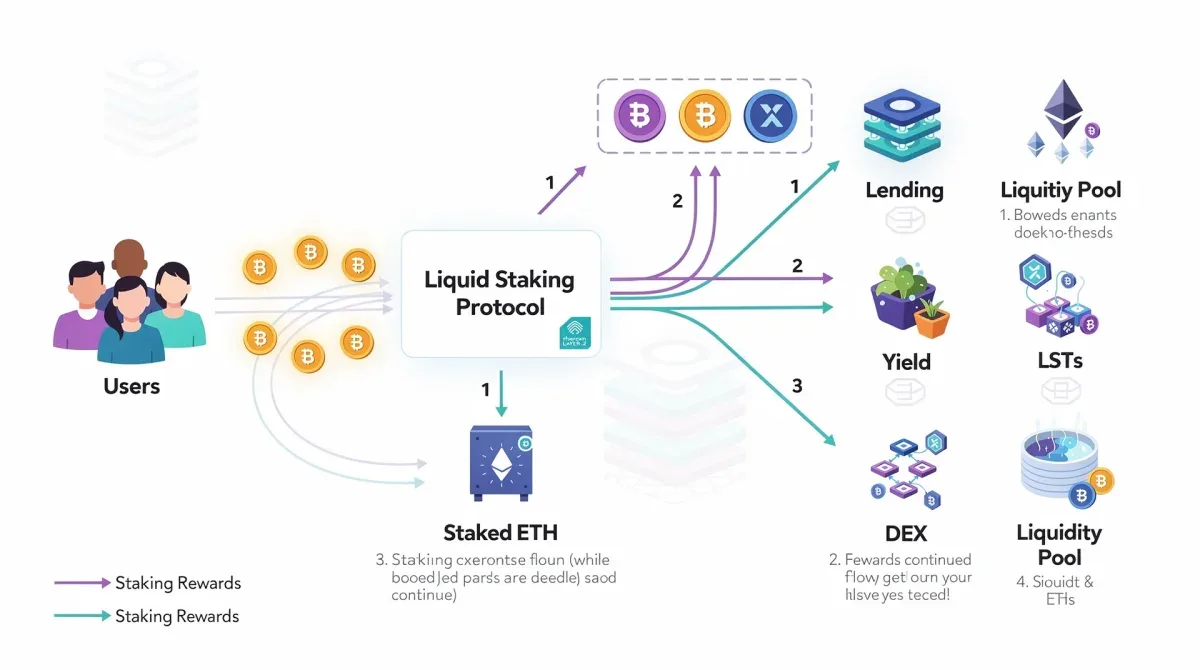
These LSTs can then be used across various DeFi protocols on Layer-2s, allowing stakers to maintain their exposure to staking rewards while simultaneously utilizing their capital in other yield-generating opportunities. By 2026, LSDs are anticipated to be even more deeply integrated into the Layer-2 ecosystem, offering sophisticated avenues for optimizing yield without sacrificing liquidity.
How LSDs Function on Layer-2s
When you stake ETH through an LSD protocol on a Layer-2, you receive an LST (e.g., stETH, rETH, cbETH). This LST accrues staking rewards automatically and can be freely traded or used as collateral. The beauty of deploying LSDs on Layer-2s lies in the reduced transaction costs and increased speed, making the process of swapping, lending, or borrowing against LSTs far more efficient.
For instance, an investor can stake their ETH via Lido on Arbitrum, receive stETH on Arbitrum, and then deposit that stETH into a lending protocol on the same Layer-2 to earn additional interest. This creates a powerful compounding effect, layering yields on top of the base staking reward. This multi-layered approach is critical for reaching and sustaining an 8.5% target yield.
- Dual Yield Generation: Earn staking rewards from the underlying ETH and additional yield from using the LST in DeFi.
- Increased Capital Efficiency: Staked assets remain productive, preventing idle capital.
- Flexibility and Accessibility: LSTs can be easily transferred, traded, or used as collateral across compatible Layer-2 platforms.
The integration of LSDs with Layer-2 infrastructure creates a powerful synergy. It allows investors to circumvent the liquidity constraints of mainnet staking while benefiting from the scalability and cost-effectiveness of Layer-2s. This synergy is a cornerstone for optimizing your staking yield in 2026, making capital work harder and smarter.
Advanced Yield Aggregation Strategies on Layer-2s
Yield aggregation platforms are sophisticated tools that automate the process of finding and executing the most profitable yield farming strategies across various DeFi protocols. On Ethereum Layer-2s, these aggregators become even more effective due to lower transaction costs and faster execution, making frequent strategy adjustments and compounding more viable. By 2026, these platforms will likely offer even more refined and capital-efficient strategies to achieve high staking yields.
These platforms take pooled user funds and automatically deploy them into various vaults or strategies, which might involve lending, borrowing, providing liquidity to decentralized exchanges (DEXs), or leveraging LSDs. The goal is to maximize returns while managing risk, allowing investors to benefit from complex strategies without needing to manually manage each position.
Optimizing Returns with Aggregators
To achieve an 8.5% staking yield, simply staking ETH might not be enough. Yield aggregators on Layer-2s can significantly boost returns by employing a combination of strategies. For instance, an aggregator might stake ETH through an LSD protocol, then take the resulting LST and deposit it into a liquidity pool on a DEX, earning trading fees and additional token rewards. These rewards are then automatically compounded back into the strategy.
The efficiency of Layer-2s means that these complex operations can be executed with minimal gas fees, preserving more of the generated yield. This automation is particularly beneficial for investors who may not have the time or expertise to constantly monitor and rebalance their portfolios across multiple protocols.
- Automated Compounding: Aggregators automatically reinvest earnings, maximizing the power of compound interest.
- Diversified Strategies: Funds are spread across multiple optimized strategies, potentially reducing risk while boosting returns.
- Cost Efficiency: Lower Layer-2 transaction fees make frequent rebalancing and compounding economically feasible.
While aggregators offer significant advantages, it is crucial to research the platform's security, audit history, and the underlying strategies they employ. A well-vetted yield aggregator can be a powerful ally in the pursuit of an 8.5% yield, transforming complex DeFi mechanics into a streamlined investment process.
Risk Management and Security Considerations
While the allure of an 8.5% staking yield on Ethereum Layer-2 protocols is strong, it is paramount to approach these opportunities with a robust understanding of associated risks. The decentralized nature of these protocols, while offering innovation, also introduces unique vulnerabilities that traditional finance does not typically present. By 2026, while Layer-2 security will have matured, vigilance remains key.
Mitigating these risks involves a multi-faceted approach, focusing on due diligence, understanding protocol mechanics, and implementing personal security best practices. Ignoring these aspects can quickly erode any potential gains, turning a promising investment into a significant loss.
Key Risks in Layer-2 Staking
- Smart Contract Risk: Vulnerabilities in the code of staking protocols, LSDs, or yield aggregators can lead to exploits and loss of funds. Regular audits by reputable firms are essential, but even audited contracts can have undiscovered flaws.
- De-peg Risk for LSTs: While LSTs are designed to track the value of ETH, market dynamics or protocol issues can cause a temporary or permanent de-pegging, affecting their collateral value.
- Liquidation Risk: If using LSTs as collateral for loans, sudden market downturns or de-pegging events can lead to liquidation if collateral ratios are not carefully managed.
- Impermanent Loss: For those providing liquidity to DEXs with LSTs, volatile price movements between the LST and its paired asset can result in impermanent loss, reducing the value of your position.
- Centralization Risk: Some Layer-2s or staking protocols might have elements of centralization, posing risks related to censorship or single points of failure.
To navigate these risks effectively, investors should prioritize protocols with a proven track record, strong community support, and transparent governance. Diversification across different protocols and strategies can also help spread risk, preventing overexposure to any single point of failure. Always start with smaller amounts and gradually increase exposure as confidence in the protocol grows.
Furthermore, personal security practices, such as using hardware wallets, enabling two-factor authentication, and being wary of phishing attempts, are non-negotiable. The responsibility for securing assets ultimately rests with the individual investor. A comprehensive approach to risk management is the bedrock of sustainable yield optimization.
Exploring Emerging Layer-2 Solutions and Future Trends
The Ethereum Layer-2 landscape is incredibly dynamic, with new solutions and innovations constantly emerging. By 2026, we can expect even more sophisticated protocols and cross-chain functionalities that will further enhance staking yield optimization. Staying informed about these developments is crucial for maintaining a competitive edge and identifying the next wave of opportunities.
The drive for greater scalability, security, and user experience continues to fuel innovation in the Layer-2 space. Understanding these evolving trends can help investors position themselves to capitalize on future high-yield opportunities while staying ahead of potential risks.
Key Trends to Watch
- Modular Blockchains: The concept of modular blockchains, where different layers handle specific functions (e.g., execution, data availability, settlement), could lead to even more specialized and efficient Layer-2s. This modularity might allow for highly optimized staking environments.
- Account Abstraction: This technology aims to improve the user experience by making crypto wallets more flexible and secure, potentially simplifying complex staking strategies and integrations with yield aggregators.
- Zero-Knowledge (ZK) Rollups Dominance: ZK-rollups are expected to gain significant traction due to their superior security and scalability properties. As these technologies mature, they will offer even more robust foundations for high-yield DeFi applications.
- Cross-Chain Interoperability: Seamless asset transfer and communication between different Layer-2s and even other blockchain ecosystems will unlock new arbitrage and yield opportunities, allowing strategies to span across multiple networks.
Investors should pay close attention to protocols that are innovating in these areas, as they are likely to offer the most compelling yield opportunities in the long run. Participating in governance for promising Layer-2 projects can also provide insights into future developments and potential rewards.
The evolution of Layer-2s is not just about technological advancement; it's about creating a more accessible, efficient, and profitable ecosystem for all participants. By actively monitoring and adapting to these emerging trends, investors can ensure their strategies for optimizing an 8.5% staking yield remain robust and forward-looking.
Practical Steps to Achieve an 8.5% Staking Yield
Achieving an 8.5% staking yield on Ethereum Layer-2 protocols by 2026 without sacrificing liquidity requires a structured approach. It's not merely about finding the highest APY, but rather about combining various strategies intelligently, managing risk, and staying informed. This section outlines practical steps that investors can take to build and maintain a high-yield, liquid staking portfolio.
The journey involves careful research, strategic allocation, and continuous monitoring. A blend of direct staking, liquid staking derivatives, and smart yield aggregation will form the core of this optimization process, all while leveraging the efficiency of Layer-2s.
Building Your Optimized Staking Portfolio
Here are actionable steps to consider:
- Educate Yourself on Layer-2 Ecosystems: Understand the different Layer-2 technologies (Optimistic Rollups, ZK-Rollups) and their respective ecosystems (Arbitrum, Optimism, zkSync Era, StarkNet). Each has unique characteristics that influence transaction costs, speed, and available protocols.
- Identify Reputable Liquid Staking Protocols: Choose established LSD providers that support Layer-2 deployments. Look for protocols with a strong track record, audited smart contracts, and a healthy LST market capitalization. Lido, Rocket Pool, and Frax Finance are examples of protocols to research.
- Explore Yield Aggregators on Layer-2s: Research yield aggregation platforms that operate on your chosen Layer-2s. Platforms like Yearn Finance, Beefy Finance, or Convex Finance (if integrated with Layer-2s) can automate complex strategies. Prioritize those with transparent strategies and robust security.
- Diversify Your Staking Strategy: Do not put all your capital into a single protocol or strategy. Allocate funds across different LSDs and yield aggregation vaults to spread risk. For example, you might stake a portion directly, use another portion for LSTs in a lending protocol, and a third in a yield farm.
- Monitor and Rebalance Regularly: The DeFi landscape is constantly changing. Yields fluctuate, new opportunities emerge, and risks evolve. Regularly monitor your positions, review APYs, and rebalance your portfolio to capitalize on new opportunities or mitigate emerging risks.
- Understand Gas Fees and Slippage: Even on Layer-2s, transaction fees and slippage can impact net returns. Factor these costs into your calculations, especially when rebalancing or entering/exiting positions.
By meticulously following these steps, investors can construct a robust and adaptable staking portfolio designed to achieve and sustain an 8.5% yield. The key is to be proactive, informed, and strategic in navigating the evolving world of Ethereum Layer-2 DeFi.
The Economic Impact of Optimized Layer-2 Staking
Optimizing an 8.5% staking yield on Ethereum Layer-2 protocols by 2026 extends beyond individual investor gains; it carries significant economic implications for the broader crypto ecosystem and traditional finance. As Layer-2s become more efficient and yields more accessible, they contribute to a more robust, liquid, and inclusive financial landscape. This evolution could reshape how capital is deployed and managed globally, fostering greater adoption of decentralized financial instruments.
The ability to generate substantial, liquid yields on foundational assets like ETH creates a powerful incentive for both retail and institutional investors to participate in the decentralized economy. This increased participation fuels network security, enhances liquidity across DeFi, and drives further innovation.
Broader Economic Benefits
- Increased Capital Efficiency: By unlocking the liquidity of staked assets, more capital becomes available for other productive uses within DeFi, stimulating growth and innovation across various protocols. This contrasts sharply with traditional finance, where assets are often illiquid.
- Democratization of Finance: Lower transaction costs and more accessible staking opportunities on Layer-2s reduce the barriers to entry for smaller investors, allowing a broader demographic to participate in wealth creation previously reserved for larger entities.
- Enhanced Network Security: A higher participation rate in staking, facilitated by Layer-2s and LSDs, directly contributes to the security and decentralization of the Ethereum network, making it more resilient against attacks.
- Innovation in Financial Products: The demand for optimized yields drives the development of new and complex financial instruments, pushing the boundaries of what is possible in decentralized finance. This continuous innovation benefits the entire ecosystem.
- Bridging Traditional and Decentralized Finance: As Layer-2 yields become more attractive and reliable, they can draw interest from traditional financial institutions looking for new alpha generation strategies, potentially leading to greater institutional adoption of crypto assets.
The economic impact is a virtuous cycle: optimized yields attract more capital, which strengthens the network, encourages innovation, and ultimately leads to even more sophisticated yield opportunities. This trajectory positions Ethereum Layer-2 staking as a pivotal force in the future of global finance, offering a glimpse into a more efficient, transparent, and inclusive economic system.
| Key Strategy | Brief Description |
|---|---|
| Liquid Staking Derivatives (LSDs) | Tokenized staked ETH provides liquidity, allowing participation in other DeFi protocols while earning staking rewards. |
| Yield Aggregation Platforms | Automate complex yield farming strategies across various Layer-2 protocols to maximize and compound returns efficiently. |
| Diversification & Risk Management | Spread investments across multiple protocols and strategies, and conduct thorough due diligence to mitigate smart contract and market risks. |
| Emerging Layer-2 Technologies | Stay updated on new ZK-rollups, modular blockchains, and cross-chain solutions for future high-yield opportunities. |
Frequently Asked Questions About Layer-2 Staking
What are Ethereum Layer-2 protocols and why are they important for staking? ▼Ethereum Layer-2 protocols are scaling solutions that process transactions off the main Ethereum chain, then batch them back. They are crucial for staking because they reduce transaction costs and increase speeds, making high-frequency yield optimization strategies and liquid staking derivatives economically viable and accessible for more users.
How do Liquid Staking Derivatives (LSDs) help maintain liquidity while staking? ▼LSDs issue a tokenized representation of your staked ETH (LSTs). These LSTs can be used in other DeFi applications like lending or liquidity pools on Layer-2s, allowing you to earn additional yield while your original ETH remains staked and earns rewards, thus preserving liquidity.
What are the main risks associated with optimizing staking yields on Layer-2s? ▼Key risks include smart contract vulnerabilities, LST de-pegging from ETH, liquidation risks if using LSTs as collateral, and impermanent loss in liquidity pools. It's vital to conduct thorough due diligence, diversify, and understand the specific mechanisms of each protocol to mitigate these risks.
Can yield aggregation platforms truly achieve an 8.5% yield on Layer-2s? ▼Yield aggregation platforms can significantly boost returns by automating complex strategies like compounding and leveraging multiple DeFi protocols. While an 8.5% yield is ambitious, it's achievable on Layer-2s by combining base staking with additional yields from lending, liquidity provision, and efficient compounding, provided market conditions are favorable.
What future trends should investors monitor in Layer-2 staking? ▼Investors should monitor the rise of ZK-rollups for enhanced security and scalability, advancements in modular blockchains, account abstraction for improved user experience, and increased cross-chain interoperability. These trends will likely unlock new, more efficient, and potentially higher-yielding opportunities in the Layer-2 staking landscape.
Conclusion
The pursuit of an 8.5% staking yield on Ethereum Layer-2 protocols by 2026 without sacrificing liquidity is an ambitious yet attainable goal for informed investors. By strategically leveraging the power of liquid staking derivatives, employing advanced yield aggregation strategies, and meticulously managing risks, participants in the DeFi ecosystem can unlock significant returns. The continuous evolution of Layer-2 technologies promises a future where capital efficiency and accessibility redefine traditional financial paradigms, making diligent research and adaptive strategies paramount for success in this dynamic landscape.
