Spot Bitcoin ETFs: $140 Billion & Retirement Funds
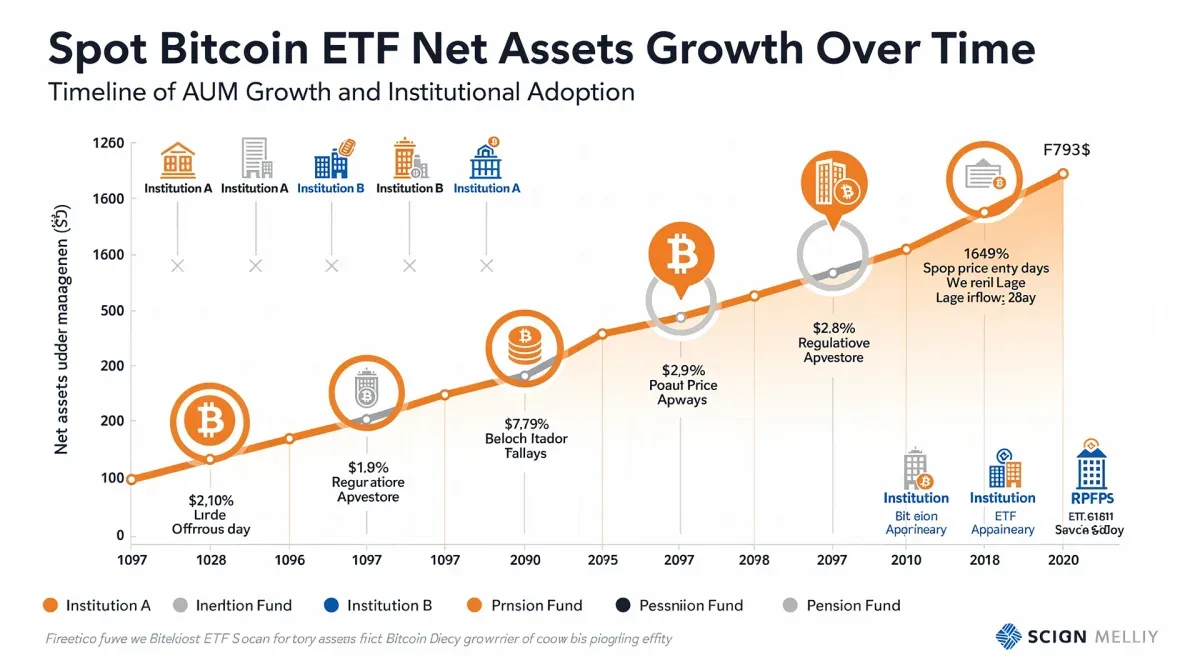
Spot Bitcoin ETFs have rapidly accumulated over $140 billion in net assets, marking a pivotal shift as US retirement funds increasingly integrate them into their diversified portfolios, signaling mainstream acceptance and substantial market growth.
The financial landscape is undergoing a profound transformation, with spot Bitcoin ETFs emerging as a dominant force. These investment vehicles have not only shattered expectations by surpassing $140 billion in net assets but are also fundamentally altering how US retirement funds approach asset allocation. This remarkable growth signifies a critical juncture, bridging the innovative world of digital assets with the traditionally conservative realm of retirement planning, opening new avenues for diversification and potential long-term value.
The Meteoric Rise of Spot Bitcoin ETFs
The introduction of spot Bitcoin ETFs in the United States marked a watershed moment for the cryptocurrency industry. Prior to their approval, institutional investors and retail savers alike faced significant hurdles in gaining direct, regulated exposure to Bitcoin. These new financial products have democratized access, allowing investors to participate in Bitcoin's price movements without the complexities of direct ownership, such as managing private keys or navigating cryptocurrency exchanges.
The initial skepticism surrounding these products quickly dissipated as inflows surged, demonstrating a robust appetite from both institutional and individual investors. This rapid accumulation of assets underscores a growing confidence in Bitcoin as a legitimate asset class, capable of contributing to diversified portfolios. The ease of access provided by ETFs, coupled with the regulatory oversight, has made them an attractive option for a broad spectrum of investors seeking exposure to digital assets.
Understanding the ETF Structure and Benefits
Spot Bitcoin ETFs are designed to track the real-time market price of Bitcoin. Unlike futures-based ETFs, which derive their value from Bitcoin futures contracts, spot ETFs directly hold Bitcoin, offering a more direct and often preferred form of exposure for many investors. This direct holding mechanism eliminates certain complexities and potential basis risks associated with futures contracts, providing a more straightforward investment proposition.
- Accessibility: Traded on traditional stock exchanges, making them easily accessible through standard brokerage accounts.
- Liquidity: Benefit from the high liquidity of established financial markets, allowing for efficient buying and selling.
- Security: The underlying Bitcoin is held by regulated custodians, offering enhanced security compared to self-custody.
- Diversification: Provide a new avenue for portfolio diversification, potentially uncorrelated with traditional assets.
The structure of these ETFs also includes stringent regulatory compliance, which has been a key factor in attracting more conservative investors, including large institutional players. This regulatory framework provides a layer of trust and transparency that was previously less prevalent in direct cryptocurrency investments.
In essence, the rise of spot Bitcoin ETFs is not just about a new product; it's about a fundamental shift in how Bitcoin is perceived and integrated into the global financial system. Their success reflects a broader acceptance of digital assets and their potential role in a modern investment portfolio, moving Bitcoin from the fringes to the mainstream of financial discourse.
US Retirement Funds Embrace Digital Assets
Historically, US retirement funds have maintained a cautious stance towards novel asset classes, prioritizing stability and long-term growth for their beneficiaries. The recent expansion of allocations to spot Bitcoin ETFs by these funds represents a significant departure from this traditional approach, signaling a profound shift in investment philosophy. This move is driven by a combination of factors, including Bitcoin's impressive performance, its potential as an inflation hedge, and the increasing demand from plan participants for exposure to digital assets.
The decision to include Bitcoin ETFs in retirement portfolios is not made lightly. It involves extensive due diligence, risk assessment, and a thorough understanding of the regulatory landscape. However, the compelling arguments for Bitcoin's inclusion, particularly its potential for high returns and its role as a diversifier, have begun to sway even the most conservative fund managers.

The integration of digital assets into retirement plans provides a new dimension to portfolio construction, offering a potential hedge against traditional market volatility and a pathway to enhanced returns in a low-yield environment. This strategic allocation reflects a forward-thinking approach to managing long-term wealth.
Factors Driving Retirement Fund Adoption
Several key factors are contributing to the increasing comfort of retirement funds with spot Bitcoin ETFs. These include the maturation of the cryptocurrency market, improved regulatory clarity, and a growing understanding of Bitcoin's unique economic properties. Fund managers are recognizing that ignoring digital assets could mean missing out on significant growth opportunities for their beneficiaries.
- Performance Track Record: Bitcoin's historical performance, despite its volatility, has demonstrated significant long-term growth potential.
- Inflation Hedge: Perceived by many as a hedge against inflation, offering protection in uncertain economic times.
- Regulatory Clarity: The approval of spot ETFs by the SEC provides a level of regulatory legitimacy and oversight.
- Participant Demand: A younger generation of investors is increasingly seeking exposure to digital assets in their retirement accounts.
The due diligence process for retirement funds is rigorous, often involving extensive research into the underlying technology, market dynamics, and custodial solutions. The availability of regulated spot Bitcoin ETFs simplifies much of this process, providing a familiar and trusted investment vehicle.
The expansion of allocations by US retirement funds into spot Bitcoin ETFs is a testament to the evolving financial landscape. It highlights a growing recognition of digital assets as a legitimate and potentially valuable component of a well-diversified, long-term investment strategy. This trend is likely to continue as more funds become comfortable with the asset class and its regulatory framework solidifies.
Impact on the Broader Financial Market
The substantial inflow of capital into spot Bitcoin ETFs, particularly from US retirement funds, is having a ripple effect across the broader financial market. This influx of institutional money is not only validating Bitcoin as a serious asset but is also influencing market dynamics, liquidity, and even the perception of traditional finance. The sheer volume of assets now under management in these ETFs underscores a growing institutionalization of Bitcoin, moving it further away from its earlier perception as a niche, speculative asset.
This institutional embrace is bringing a new level of stability and legitimacy to the cryptocurrency market. As large, long-term investors allocate capital, it can help to reduce some of the extreme volatility historically associated with Bitcoin. Furthermore, the integration of Bitcoin ETFs into traditional financial platforms means that more sophisticated analytical tools and risk management strategies are being applied to this asset class, enhancing market efficiency and transparency.
Shifting Investment Paradigms
The emergence of spot Bitcoin ETFs and their adoption by retirement funds signifies a shift in investment paradigms. Investors and fund managers are now forced to consider digital assets as a core component of future portfolios, rather than an an alternative or speculative play. This re-evaluation is leading to a broader acceptance of innovative financial products and a more dynamic approach to asset allocation.
- Increased Liquidity: Higher trading volumes in ETFs contribute to greater market liquidity for Bitcoin itself.
- Mainstream Acceptance: Institutional adoption lends credibility, fostering broader public and corporate acceptance.
- Product Innovation: Success of spot Bitcoin ETFs may pave the way for other digital asset ETFs and related financial products.
- Regulatory Evolution: Increased institutional involvement often leads to more refined and clearer regulatory frameworks.
The impact extends beyond Bitcoin itself, potentially opening the door for other digital assets to gain similar institutional traction. As the infrastructure for digital asset investment matures, the financial services industry will likely see a wave of innovation aimed at catering to this growing demand.
Ultimately, the influence of spot Bitcoin ETFs on the broader financial market is profound. It represents a bridge between traditional finance and the digital economy, fostering a more integrated and diversified global investment landscape. This integration is not just about capital flows; it's about a fundamental evolution in how assets are valued, managed, and understood within the financial ecosystem.
Challenges and Considerations for Investors
While the growth of spot Bitcoin ETFs and their adoption by retirement funds signals a positive trend, it is crucial for investors and fund managers to remain cognizant of the inherent challenges and considerations. Despite regulatory oversight and increased liquidity, Bitcoin, and by extension its ETF counterparts, still carries unique risks that differ from traditional asset classes. Understanding these nuances is paramount for making informed investment decisions and managing expectations effectively.
The volatility of Bitcoin remains a primary concern. Although institutional involvement may temper some of the extreme price swings, the cryptocurrency market is known for its rapid and often unpredictable movements. This volatility can present significant opportunities but also poses substantial risks, particularly for long-term retirement savings where capital preservation is a key objective.
Navigating the Volatility and Regulatory Landscape
Investors must approach spot Bitcoin ETFs with a clear understanding of the risks involved. Diversification within the digital asset space, or limiting the allocation within a broader portfolio, can be strategies to mitigate the impact of price fluctuations. Furthermore, the regulatory environment, while improving, is still evolving and can introduce new uncertainties.
- Market Volatility: Bitcoin's price can experience significant swings, impacting ETF values.
- Regulatory Changes: Potential for new regulations or policy shifts that could affect the digital asset market.
- Custodial Risks: While regulated, the security of underlying Bitcoin holdings by custodians remains a critical factor.
- Technological Risks: Exposure to risks associated with blockchain technology, though less direct with an ETF.
Another aspect to consider is the correlation of Bitcoin with other asset classes. While historically it has shown some independence, in certain market conditions, it might move in tandem with broader risk assets. Retirement funds need to assess how Bitcoin ETFs fit into their overall asset allocation strategy and how they might behave during different economic cycles.
In conclusion, while spot Bitcoin ETFs offer compelling opportunities, they are not without their challenges. A balanced approach, thorough risk assessment, and continuous monitoring of market and regulatory developments are essential for investors considering these products for their portfolios, especially within the context of long-term retirement planning.
Future Outlook for Bitcoin ETFs and Retirement Portfolios
The trajectory for spot Bitcoin ETFs and their continued integration into US retirement portfolios appears robust, driven by persistent demand, evolving regulatory frameworks, and increasing market maturity. As these products gain a longer track record and further demonstrate their utility within diversified investment strategies, their role in the financial ecosystem is likely to expand even further. This positive outlook is supported by a growing consensus among financial professionals regarding the long-term potential of digital assets.
Looking ahead, we can anticipate several key developments. The competitive landscape among ETF providers will likely intensify, leading to potential fee reductions and innovative product offerings. Furthermore, as more data becomes available on the performance of Bitcoin ETFs within institutional portfolios, investment committees may become even more comfortable with larger allocations, reinforcing the asset class's position.

The ongoing education of financial advisors and plan administrators will also play a crucial role. As understanding of Bitcoin and blockchain technology deepens, the confidence in recommending and integrating these assets into retirement plans will naturally grow, fostering broader adoption.
Potential Growth Areas and Innovations
The success of spot Bitcoin ETFs could serve as a blueprint for the introduction of other single-asset digital currency ETFs, such as Ethereum ETFs, further diversifying the options available to institutional investors. This expansion could create an entirely new segment within the traditional financial markets, offering regulated access to a wider array of digital assets.
- Expanded Product Offerings: Introduction of ETFs for other major cryptocurrencies.
- Enhanced Analytics: Development of more sophisticated tools for analyzing digital asset performance and risk.
- Global Adoption: Increased interest and adoption from retirement funds in other developed nations.
- Customized Solutions: Creation of tailored digital asset investment solutions for specific fund mandates.
Moreover, the technological advancements in blockchain itself, such as improvements in scalability and security, will undoubtedly contribute to the long-term viability and attractiveness of digital assets. These innovations will further solidify the foundation upon which Bitcoin ETFs are built, providing greater assurance to long-term investors.
In summary, the future for spot Bitcoin ETFs and their place in retirement portfolios is bright. The convergence of traditional finance with the digital asset space is creating a more dynamic and resilient investment environment, promising continued growth and innovation for years to come. This evolution is set to redefine what constitutes a truly diversified and forward-looking retirement strategy.
Strategic Implications for Investors and Advisors
The significant milestone of spot Bitcoin ETFs surpassing $140 billion in net assets, coupled with the expanding allocations from US retirement funds, carries profound strategic implications for both individual investors and financial advisors. This development necessitates a re-evaluation of traditional portfolio construction theories and a proactive approach to understanding the evolving landscape of digital assets. For advisors, it means equipping themselves with the knowledge and tools to effectively counsel clients on the role of Bitcoin ETFs within their financial plans.
For individual investors, the accessibility of Bitcoin through ETFs presents an opportunity to diversify their retirement savings beyond conventional stocks, bonds, and real estate. However, this accessibility also places a greater onus on them to understand the risks and rewards associated with this relatively new asset class. Making informed decisions requires more than just following trends; it demands a solid grasp of market dynamics and personal risk tolerance.
Integrating Bitcoin ETFs into Financial Planning
Financial advisors are now faced with the task of integrating spot Bitcoin ETFs into comprehensive financial plans. This involves not only assessing a client's suitability for such an investment but also educating them on its characteristics and potential impact on their overall portfolio. A balanced approach that considers long-term goals, risk capacity, and diversification principles is essential.
- Client Education: Advisors must educate clients on the nature, risks, and benefits of Bitcoin ETFs.
- Risk Assessment: Thoroughly assess client risk tolerance and capacity for digital asset exposure.
- Portfolio Allocation: Determine appropriate allocation percentages that align with overall financial goals.
- Regulatory Compliance: Stay updated on regulatory guidelines affecting digital asset investments in retirement accounts.
The conversation between advisors and clients regarding Bitcoin ETFs should extend beyond mere returns. It should encompass discussions on market cycles, potential volatility, and the long-term vision for digital assets. This comprehensive approach ensures that investment decisions are well-grounded and aligned with the client's broader financial objectives.
Ultimately, the strategic implications of spot Bitcoin ETFs becoming a staple in retirement portfolios are far-reaching. They challenge existing frameworks, encourage innovation, and demand a more dynamic and informed approach to investment management. Both investors and advisors must adapt to this new reality, leveraging the opportunities while carefully mitigating the inherent risks.
| Key Point | Brief Description |
|---|---|
| Asset Growth | Spot Bitcoin ETFs have rapidly surpassed $140 billion in net assets. |
| Retirement Fund Adoption | US retirement funds are increasingly allocating capital to these ETFs. |
| Market Impact | Signifies mainstream acceptance and potential for broader market shifts. |
| Investor Considerations | Requires understanding of volatility and regulatory landscape for informed decisions. |
Frequently Asked Questions About Spot Bitcoin ETFs
What is a spot Bitcoin ETF?▼A spot Bitcoin ETF is an exchange-traded fund that directly holds Bitcoin as its underlying asset, tracking its real-time market price. It allows investors to gain exposure to Bitcoin without directly owning or managing the cryptocurrency itself, trading like a traditional stock on regulated exchanges.
Why are US retirement funds investing in Bitcoin ETFs?▼Retirement funds are investing due to Bitcoin's strong performance, its potential as an inflation hedge, and increasing participant demand for digital asset exposure. The regulated nature of spot ETFs provides a familiar and trusted investment vehicle, aligning with their long-term growth and diversification strategies.
What are the benefits of investing in a spot Bitcoin ETF?▼Benefits include accessibility through traditional brokerage accounts, enhanced liquidity, and security due to regulated custodianship. They also offer a simplified way to diversify portfolios with digital assets, avoiding the complexities of direct cryptocurrency ownership and management.
What risks are associated with spot Bitcoin ETFs?▼Key risks include market volatility, as Bitcoin's price can fluctuate significantly. There are also potential risks related to evolving regulatory changes, the security practices of custodians holding the underlying Bitcoin, and broader technological risks inherent to blockchain and digital assets.
How do spot Bitcoin ETFs impact the broader financial market?▼Their impact includes increased liquidity for Bitcoin, mainstream acceptance of digital assets, and the potential for new product innovations. Institutional involvement also contributes to greater market stability and transparency, fostering a more integrated financial ecosystem between traditional and digital assets.
Conclusion
The remarkable ascent of spot Bitcoin ETFs, now exceeding $140 billion in net assets, signifies a pivotal moment in financial history. The growing embrace by US retirement funds underscores a fundamental shift in investment strategies, recognizing digital assets as a legitimate and valuable component of diversified portfolios. While challenges such as volatility and evolving regulations persist, the long-term outlook points towards continued integration and innovation, redefining the boundaries of traditional finance and offering new avenues for wealth accumulation in the digital age.
