Spot Bitcoin ETFs vs Self-Custody: A 3-Year Analysis
Comparing Spot Bitcoin ETFs with native self-custody reveals critical differences in expense ratios and slippage over a three-year period, impacting investor returns and offering distinct advantages based on individual priorities and risk tolerance.
The landscape of Bitcoin investment has evolved significantly, presenting investors with choices beyond direct ownership. This article delves into a crucial comparison: Spot Bitcoin ETFs vs Native Self-Custody: A 3-Year Expense Ratio and Slippage Analysis, helping you navigate the complexities and understand the true costs involved in each approach.
Understanding Spot Bitcoin ETFs: The New Investment Frontier
Spot Bitcoin Exchange-Traded Funds (ETFs) represent a pivotal development in cryptocurrency investment, offering a regulated and accessible pathway for traditional investors to gain exposure to Bitcoin's price movements without directly holding the asset. These funds aim to track the spot price of Bitcoin, providing a familiar investment vehicle through brokerage accounts.
The introduction of Spot Bitcoin ETFs has democratized access to Bitcoin for many, especially those accustomed to conventional financial instruments. They eliminate the complexities of setting up digital wallets, managing private keys, and navigating cryptocurrency exchanges, which can be daunting for newcomers. This ease of access is a significant draw, broadening Bitcoin's appeal beyond the tech-savvy early adopters.
How Spot Bitcoin ETFs Work
When you invest in a Spot Bitcoin ETF, you are purchasing shares in a fund that holds actual Bitcoin. The fund manager is responsible for acquiring, storing, and securing the underlying Bitcoin, typically with institutional-grade custodians. This structure provides a layer of professional management and security that many individual investors find appealing.
- Underlying Asset: The ETF directly holds Bitcoin, aiming to mirror its price performance.
- Accessibility: Traded on traditional stock exchanges, accessible through standard brokerage accounts.
- Regulatory Oversight: Subject to regulatory frameworks, offering a degree of investor protection.
- Custody Handled: Professional custodians manage the security and storage of Bitcoin.
The regulatory clarity surrounding Spot Bitcoin ETFs also contributes to their attractiveness. Operating within established financial regulations, these funds offer a perceived level of safety and legitimacy that some investors find reassuring. This contrasts with the less regulated environment of direct cryptocurrency exchanges, which can sometimes be a source of apprehension.
However, this convenience comes with its own set of considerations, primarily in the form of fees and potential trading inefficiencies. Understanding these factors is crucial for a comprehensive comparison with native self-custody, especially when projecting costs over a multi-year horizon. The fee structures and operational aspects of ETFs can significantly impact long-term returns, necessitating a thorough analysis.
The Fundamentals of Native Bitcoin Self-Custody
Native Bitcoin self-custody represents the purest form of Bitcoin ownership, where individuals directly control their private keys and, consequently, their Bitcoin. This approach embodies the decentralized ethos of Bitcoin, empowering users with complete autonomy over their digital assets. It bypasses intermediaries, offering a direct relationship with the blockchain.
For many Bitcoin maximalists and privacy advocates, self-custody is the only true way to own Bitcoin. It eliminates counterparty risk, meaning you are not reliant on a third party to hold or manage your assets. This independence is a core tenet of Bitcoin's design, providing a level of sovereignty over one's wealth that is unparalleled in traditional finance.
Methods of Self-Custody
Self-custody typically involves using hardware wallets, software wallets, or even paper wallets to store Bitcoin. Hardware wallets are generally considered the most secure option, as they keep private keys offline, protecting them from online threats. Software wallets offer convenience for more frequent transactions, while paper wallets are a more archaic, though still viable, cold storage method.
- Hardware Wallets: Physical devices storing private keys offline, offering robust security.
- Software Wallets: Applications on computers or smartphones, convenient for everyday use.
- Paper Wallets: Private keys printed on paper, a form of cold storage (less common now).
- Full Control: Users retain absolute control over their private keys and funds.
The responsibility that comes with self-custody is significant. Losing private keys means permanent loss of funds, and failing to secure them properly can lead to theft. Therefore, this approach demands a high level of technical proficiency and discipline from the user. It's a trade-off between absolute control and the inherent risks of managing one's own security.
Despite the challenges, the philosophical appeal of self-custody remains strong. It aligns with Bitcoin's foundational principles of decentralization and individual financial freedom. For those willing to invest the time and effort into understanding and implementing robust security practices, self-custody offers an unmatched sense of ownership and independence, free from the constraints and costs associated with intermediaries.
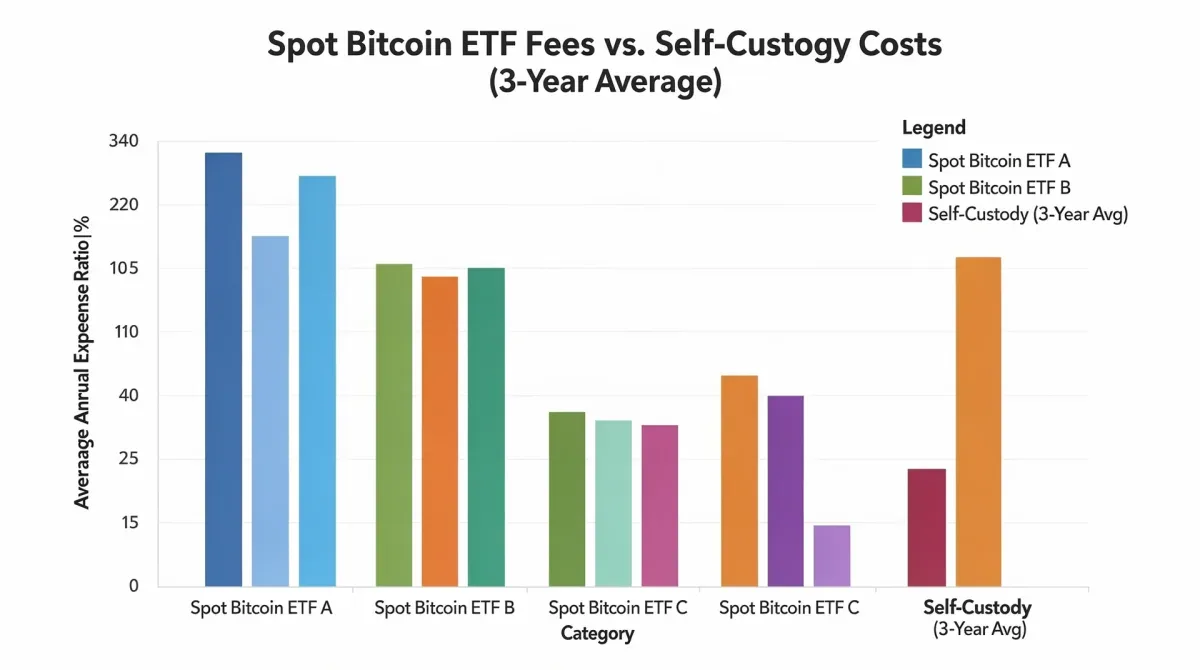
Expense Ratio Analysis: ETFs vs. Self-Custody Over 3 Years
When evaluating investment options, the expense ratio stands as a critical factor, directly impacting net returns. For Spot Bitcoin ETFs, expense ratios are typically expressed as an annual percentage of the assets under management (AUM). These fees cover operational costs, management, custody, and administrative expenses incurred by the fund.
Over a three-year period, these seemingly small percentages can accumulate into substantial amounts, eroding a significant portion of an investor's gains. Different ETFs will have varying expense ratios, and careful consideration of these figures is paramount before making an investment decision. A lower expense ratio generally translates to more of your investment capital working for you.
Typical ETF Expense Ratios
Spot Bitcoin ETFs generally come with expense ratios ranging from approximately 0.20% to 1.50% annually. While some initial offerings might feature promotional fee waivers, these typically expire, and the standard fees apply. Investors must factor in these recurring costs, as they are deducted from the fund's assets regardless of its performance.
- Management Fees: Covers the fund manager's services and operational overhead.
- Custody Fees: Payments to institutional custodians for securing the Bitcoin.
- Administrative Costs: Various operational and regulatory compliance expenses.
- Marketing Fees: Sometimes included, covering promotional activities.
In contrast, native self-custody typically involves a different set of costs, which are often non-recurring or less frequent. The primary initial expense for self-custody is the purchase of a hardware wallet, which can range from $50 to $200. This is a one-time cost, though some users might opt for multiple devices for redundancy or advanced security setups.
Beyond the initial hardware cost, transaction fees (known as "miner fees" or "network fees") are incurred when sending Bitcoin. These fees are paid to the Bitcoin network to process transactions and vary based on network congestion and transaction size. They are generally much lower than ETF expense ratios, especially for long-term holding where transactions are infrequent. Over three years, the cumulative cost of a hardware wallet and occasional transaction fees for a buy-and-hold strategy is often significantly less than the recurring annual fees of an ETF, particularly for larger investment amounts. This makes self-custody potentially more cost-effective for long-term investors.
Analyzing Slippage: Hidden Costs in Trading Bitcoin
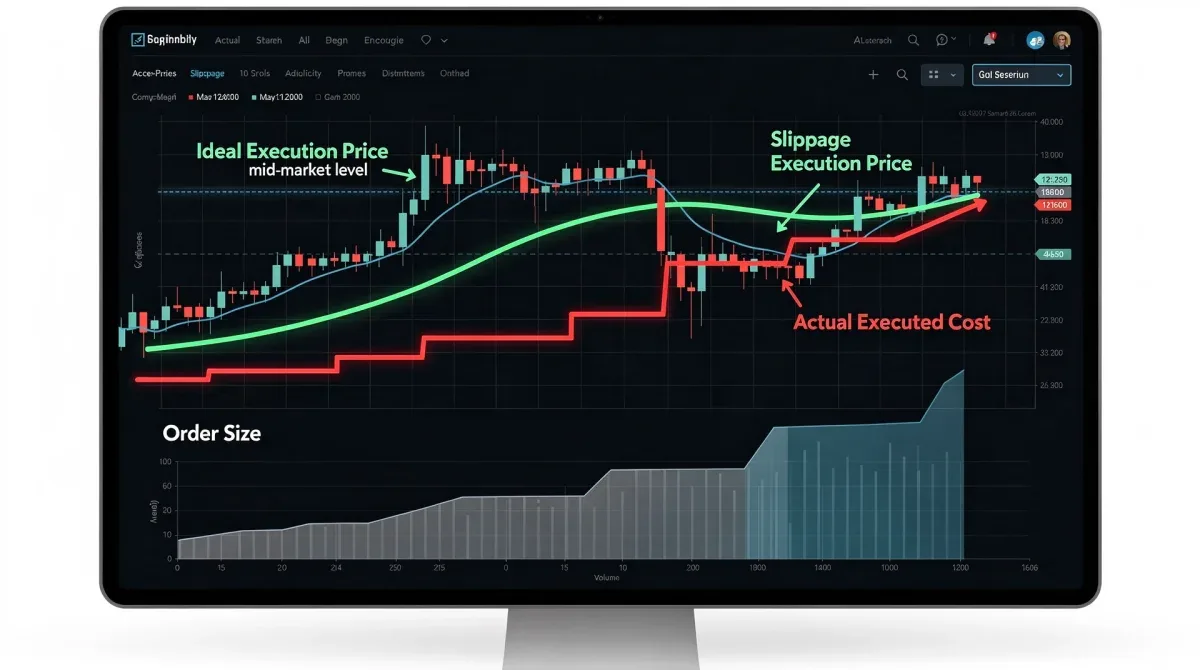
Slippage refers to the difference between the expected price of a trade and the price at which the trade actually executes. This phenomenon is particularly relevant in volatile markets like cryptocurrency, and it can affect both Spot Bitcoin ETFs and direct Bitcoin purchases, albeit through different mechanisms. Understanding slippage is crucial for accurately assessing the true cost of investment.
In traditional markets, slippage can occur when there isn't enough liquidity to fill a large order at the desired price, or during periods of high volatility when prices move rapidly. The same principles apply to Bitcoin. For ETFs, slippage can impact the fund's ability to perfectly track the spot price of Bitcoin, while for direct purchases, it can affect the actual price an individual pays or receives.
Slippage in Spot Bitcoin ETFs
Spot Bitcoin ETFs, while designed to track Bitcoin's price, are not immune to slippage. The fund manager must buy and sell Bitcoin to create or redeem shares, and these underlying transactions can incur slippage, especially for large orders or during periods of market stress. This slippage can contribute to a tracking error, where the ETF's performance deviates from the actual Bitcoin price.
- Market Liquidity: Insufficient liquidity in the underlying Bitcoin market can cause slippage for the ETF.
- Large Order Execution: The fund's need to execute large Bitcoin trades can lead to price discrepancies.
- Volatility: Rapid price movements in Bitcoin increase the likelihood and magnitude of slippage.
- Tracking Error: Slippage can contribute to the ETF's deviation from its underlying asset's performance.
For native self-custody, slippage primarily occurs when an individual buys or sells Bitcoin on an exchange. The price displayed on the order book might not be the exact price at which the trade is executed, particularly if the order is large relative to the available liquidity. This is a direct cost borne by the individual investor.
Over a three-year period, the cumulative effect of slippage can be significant. While ETF slippage is an embedded cost reflected in tracking error, direct purchase slippage is a direct transactional cost. Investors engaging in frequent trading, whether through an ETF or direct purchases, will likely experience more substantial slippage costs. However, for a long-term buy-and-hold strategy via self-custody, slippage is primarily a concern during the initial purchase and eventual sale, making its impact less frequent compared to the continuous, albeit indirect, slippage experienced by ETF holders due to fund rebalancing and operational trading.
Security Considerations: Custody vs. Self-Custody
Security is paramount in the world of cryptocurrency. The choice between Spot Bitcoin ETFs and native self-custody fundamentally alters how your Bitcoin is secured, each presenting distinct advantages and risks. Understanding these differences is crucial for any investor.
With Spot Bitcoin ETFs, security is handled by institutional-grade custodians. These custodians employ highly sophisticated security measures, including multi-signature wallets, cold storage solutions, and robust cybersecurity protocols. Their infrastructure is designed to protect large quantities of digital assets from theft, hacking, and other vulnerabilities, offering a professional layer of protection.
Institutional Custody in ETFs
The security model for ETFs relies on the expertise and resources of specialized custodians. These entities are often regulated and audited, providing a degree of assurance that the Bitcoin is being held securely. This offloads the burden of security from the individual investor, which can be a significant relief for those uncomfortable with managing complex digital security.
- Professional Management: Security handled by experts with extensive resources.
- Institutional-Grade Infrastructure: Advanced cold storage, multi-sig, and cybersecurity.
- Regulatory Compliance: Custodians often adhere to strict regulatory and audit standards.
- Insurance: Some custodians offer insurance policies against certain types of loss.
Conversely, native self-custody places the entire responsibility of security squarely on the individual. While this offers ultimate control, it also demands a high level of diligence and technical understanding. A single mistake, such as losing a private key or falling victim to a phishing scam, can lead to irreversible loss of funds.
For self-custody, robust security practices include using reputable hardware wallets, generating strong seed phrases, storing backups securely offline, and understanding common attack vectors. The learning curve can be steep, but mastering these practices grants unparalleled control and reduces reliance on third parties. Over a three-year span, the security of self-custody depends entirely on the user's consistent adherence to best practices, whereas ETF security is a continuous professional service. Each approach has its merits, catering to different levels of technical comfort and risk appetite.
Regulatory Landscape and Accessibility
The regulatory environment plays a significant role in the appeal and operational mechanics of both Spot Bitcoin ETFs and native self-custody. The legal and financial frameworks governing these investment avenues differ considerably, impacting their accessibility, perceived safety, and overall investor experience.
Spot Bitcoin ETFs operate within the well-established regulatory structures of traditional financial markets. In the United States, they are subject to oversight by the Securities and Exchange Commission (SEC), which provides a layer of investor protection through disclosure requirements, auditing standards, and other regulatory mandates. This regulatory clarity is a major factor driving their adoption by institutional investors and those seeking a familiar investment vehicle.
Regulatory Framework for ETFs
The regulatory approval process for Spot Bitcoin ETFs was lengthy and rigorous, signifying a significant milestone for cryptocurrency integration into mainstream finance. This oversight aims to ensure market integrity, prevent manipulation, and protect investors from fraud. For many, this regulated environment offers a sense of security that is often lacking in the broader, less regulated crypto market.
- SEC Oversight: Subject to stringent regulatory requirements and disclosure rules.
- Investor Protection: Mandates designed to safeguard investor interests.
- Market Integrity: Rules aimed at preventing market manipulation and ensuring fair trading.
- Mainstream Integration: Bridges the gap between traditional finance and cryptocurrency.
Native self-custody, by contrast, largely operates outside of direct financial regulation. While laws regarding taxation of cryptocurrency apply, the act of holding Bitcoin in a private wallet is not typically subject to the same level of oversight as a regulated financial product. This freedom from direct regulation is a double-edged sword: it offers unparalleled autonomy but also places the full burden of compliance and security on the individual.
The accessibility of ETFs is another key differentiator. They can be bought and sold through virtually any brokerage account, making them as easy to access as stocks or other traditional securities. This contrasts with self-custody, which requires individuals to navigate cryptocurrency exchanges for purchasing Bitcoin and then transfer it to a personal wallet, a process that can be intimidating for those unfamiliar with digital assets. Over a three-year period, the regulatory stability and broad accessibility of ETFs might appeal to a wider range of investors, while self-custody continues to attract those prioritizing decentralization and direct control, despite the regulatory void.
Long-Term Implications for Investors
Choosing between Spot Bitcoin ETFs and native self-custody has profound long-term implications for investors, extending beyond immediate costs to encompass strategic flexibility, risk exposure, and philosophical alignment. A three-year outlook reveals how these distinct approaches diverge in their benefits and drawbacks.
For investors prioritizing convenience, regulatory assurance, and integration with traditional financial portfolios, Spot Bitcoin ETFs offer a compelling solution. The ease of buying and selling shares through existing brokerage accounts, coupled with the professional management of custody and security, simplifies Bitcoin exposure. This can be particularly attractive for retirement accounts or institutional funds that operate under strict investment mandates.
Strategic Flexibility and Risk
However, the long-term impact of expense ratios on compounding returns cannot be overstated. Even a seemingly small annual fee can significantly reduce overall gains over three years or more. Investors must weigh the convenience and regulated nature of ETFs against this continuous cost, especially if their investment horizon is several decades. The tracking error, though usually minimal, also represents a subtle long-term drag on performance.
- Compounding Fees: Expense ratios erode long-term returns, especially over multiple years.
- Limited Control: Investors do not directly control the underlying Bitcoin.
- Counterparty Risk: Reliance on the ETF issuer and custodian introduces third-party risk.
- Regulatory Evolution: Potential for future regulatory changes affecting ETFs.
Native self-custody, on the other hand, offers the ultimate control and eliminates ongoing management fees, making it potentially more cost-effective over the long term for those with the discipline to manage their own security. The initial investment in a hardware wallet is a one-time cost, and transaction fees are only incurred when moving Bitcoin. This approach aligns with the core principles of Bitcoin, offering true ownership and financial sovereignty.
The long-term risks associated with self-custody revolve around individual responsibility for security. The consequences of losing private keys or falling victim to a sophisticated attack can be devastating. However, for a diligent investor, this risk is mitigated by robust security practices. Over three years, a carefully managed self-custody strategy can result in higher net returns due to the absence of recurring fees, provided the investor successfully navigates the security challenges. Ultimately, the best choice depends on an individual's financial goals, risk tolerance, technical acumen, and personal philosophy regarding asset ownership.
The Verdict: Choosing Your Bitcoin Investment Path
Deciding between Spot Bitcoin ETFs and native self-custody is not a one-size-fits-all answer. Both avenues offer distinct advantages and disadvantages, and the optimal choice often hinges on an investor's individual circumstances, financial goals, and comfort level with technology and risk. Over a three-year analytical period, the trade-offs become particularly evident, highlighting the importance of a well-informed decision.
For many traditional investors, especially those new to cryptocurrency, Spot Bitcoin ETFs provide an accessible and regulated entry point. The familiarity of trading through a brokerage account, combined with institutional-grade security and regulatory oversight, offers peace of mind. ETFs are ideal for those who prefer convenience and are willing to pay a recurring expense ratio for professional management and reduced personal responsibility.
Factors Influencing Your Decision
However, the long-term cumulative impact of expense ratios can significantly diminish returns. For investors with a multi-year horizon and a substantial allocation to Bitcoin, these fees can outweigh the benefits of convenience. Moreover, while ETFs aim to track Bitcoin's price accurately, tracking error and indirect slippage can subtly erode performance over time.
- Investment Horizon: Long-term investors may find self-custody more cost-effective.
- Risk Tolerance: ETFs offer regulated security; self-custody demands personal responsibility.
- Technical Proficiency: Self-custody requires a higher degree of technical skill.
- Investment Size: Larger portfolios might see greater savings with self-custody due to fee structures.
Native self-custody, conversely, appeals to investors who prioritize complete control, decentralization, and minimizing ongoing costs. While it demands a higher degree of technical expertise and personal responsibility for security, it eliminates recurring management fees, potentially leading to greater net returns over a three-year period and beyond. The initial cost of a hardware wallet is a one-time expense, and transaction fees are only incurred during transfers.
Ultimately, the choice comes down to a balance of cost, convenience, security, and control. If you value ease of access and regulatory assurance, and are comfortable with recurring fees, a Spot Bitcoin ETF might be suitable. If you prioritize absolute control, minimal ongoing costs, and are confident in managing your own security, native self-custody could be the superior option. A careful analysis of your personal financial situation and investment philosophy will guide you to the most appropriate path for your Bitcoin investment over the next three years and beyond.
| Key Point | Brief Description |
|---|---|
| Expense Ratios | ETFs incur annual fees (0.20-1.50%), while self-custody has one-time hardware costs and minor transaction fees. |
| Slippage Impact | ETFs face indirect slippage through tracking error; self-custody sees direct slippage on exchange trades. |
| Security Model | ETFs use institutional custodians; self-custody relies on individual's robust security practices. |
| Control & Accessibility | ETFs offer ease of access via brokers; self-custody provides full personal control but requires technical skill. |
Frequently Asked Questions About Bitcoin Investments
What are the primary advantages of Spot Bitcoin ETFs?▼Spot Bitcoin ETFs offer unparalleled accessibility through traditional brokerage accounts, institutional-grade security managed by professional custodians, and a regulated investment environment. They simplify Bitcoin exposure for investors who prefer not to manage private keys or navigate cryptocurrency exchanges directly, integrating seamlessly into conventional portfolios.
Why might an investor choose native self-custody over an ETF?▼Investors often choose native self-custody for complete control over their Bitcoin, eliminating counterparty risk and ongoing management fees. It aligns with Bitcoin's decentralized ethos and can be more cost-effective over the long term, especially for larger holdings, provided the investor is diligent about security practices and managing private keys.
How do expense ratios impact long-term Bitcoin ETF returns?▼Expense ratios, typically an annual percentage of assets, can significantly erode long-term returns from Spot Bitcoin ETFs. Even small percentages compound over time, reducing the net gains. Over a three-year period, these recurring fees can become a substantial cost, making it crucial for investors to factor them into their financial projections.
What is slippage, and how does it affect Bitcoin investments?▼Slippage is the difference between an expected trade price and the actual execution price, common in volatile markets. For ETFs, it contributes to tracking error. For self-custody, it's a direct transactional cost when buying/selling Bitcoin on exchanges. It can reduce profitability, especially for frequent traders or large orders.
Is self-custody truly more secure than an ETF?▼Self-custody offers ultimate control but places full security responsibility on the individual. Institutional custodians for ETFs employ advanced security measures and insurance, removing this burden. The security of self-custody depends entirely on the user's vigilance, while ETF security relies on professional third parties, appealing to different risk appetites.
Conclusion
The choice between Spot Bitcoin ETFs and native self-custody is a nuanced one, heavily influenced by an individual's investment philosophy, risk tolerance, and long-term financial objectives. While ETFs offer convenience, regulatory assurance, and professional management at the cost of recurring fees and some control, self-custody provides unparalleled autonomy and potentially lower long-term costs, albeit with significant personal responsibility for security. A thorough three-year analysis reveals that both options present valid pathways to Bitcoin exposure, but their respective advantages and disadvantages must be carefully weighed to align with an investor's unique profile in the evolving digital asset landscape.
