US Bitcoin Mining Hashrate Soars 24% with New Tax Guidance
The United States Bitcoin mining hashrate surged by an impressive 24% following the introduction of new federal clean energy tax guidance, significantly boosting the sector's growth and sustainability efforts.
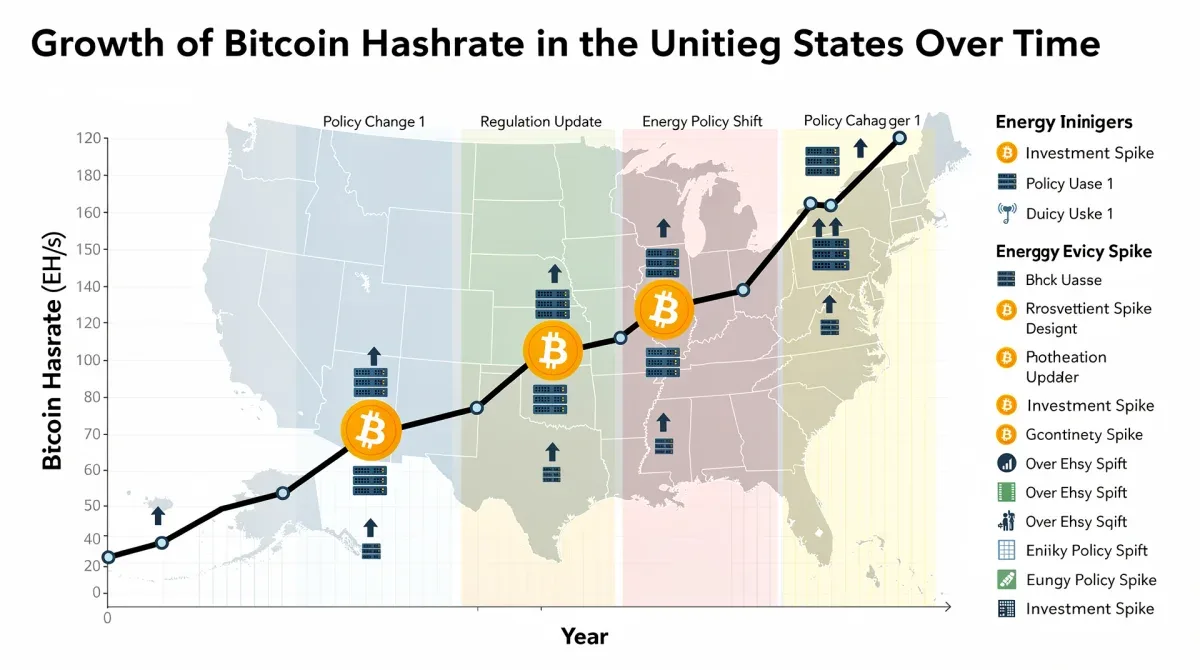
The landscape of cryptocurrency mining in the United States is undergoing a transformative shift, particularly as the US Bitcoin Mining Hashrate Climbs 24% Following New Federal Clean Energy Tax Guidance. This remarkable surge is not merely a statistical anomaly but a clear indicator of how governmental policies can profoundly influence technological adoption and economic growth within emerging sectors. It signals a pivotal moment for both the digital asset industry and the nation's energy future.
Understanding the US Bitcoin Mining Hashrate Surge
The recent 24% increase in the US Bitcoin mining hashrate represents a significant milestone for the cryptocurrency industry. This growth isn't arbitrary; it's a direct consequence of strategic federal clean energy tax guidance, which has incentivized miners to establish and expand operations within the United States. This surge highlights a maturing sector that is increasingly responsive to regulatory environments and economic stimuli.
The Role of Federal Clean Energy Tax Guidance
Federal clean energy tax guidance has emerged as a powerful catalyst for the US Bitcoin mining sector. These incentives are designed to encourage the adoption of renewable energy sources, aligning the energy-intensive process of Bitcoin mining with broader environmental sustainability goals. The guidance offers financial benefits that reduce operational costs for miners who integrate clean energy solutions, making the US an attractive hub for environmentally conscious mining operations.
- Investment Incentives: Tax credits and deductions for using solar, wind, and other renewable energy sources.
- Operational Cost Reduction: Lower energy expenses for miners leveraging subsidized clean power.
- Regulatory Clarity: Providing a stable and predictable environment for long-term investments.
- Technological Advancement: Encouraging innovation in energy-efficient mining hardware and infrastructure.
The impact of this guidance extends beyond mere financial savings; it fosters an ecosystem where sustainability is not just an ideal but a financially viable strategy. Miners are now actively seeking out locations with abundant renewable energy resources, further solidifying the US position as a leader in green Bitcoin mining.
This strategic alignment between federal policy and industry growth underscores a broader acceptance of Bitcoin mining as a legitimate economic activity. The ability to integrate clean energy solutions at scale is proving to be a competitive advantage for US-based operations, drawing in significant capital and talent. The sustained growth of the hashrate is a testament to the effectiveness of these policies in driving both economic development and environmental responsibility within the digital asset space.

The Economic Impact of Increased Hashrate in the US
The substantial increase in the US Bitcoin mining hashrate has far-reaching economic implications, extending beyond the immediate cryptocurrency sector. This growth stimulates job creation, attracts significant capital investment, and bolsters local economies, particularly in regions with abundant and affordable energy resources. The expansion of mining operations necessitates the development of new infrastructure, from power grids to data centers, creating a ripple effect across various industries.
The influx of mining companies often revitalizes rural areas, bringing in high-paying technical jobs and fostering innovation. These companies require skilled labor for maintenance, operations, and cybersecurity, contributing to a more diversified and resilient workforce. Furthermore, the demand for specialized equipment and services creates opportunities for ancillary businesses, from construction to software development, all benefiting from the thriving mining ecosystem.
Job Creation and Investment Inflow
The expansion of Bitcoin mining operations directly translates into new employment opportunities across various skill sets. From engineers and technicians to security personnel and administrative staff, the demand for labor grows significantly. This job creation is particularly impactful in areas where traditional industries may be declining, offering new avenues for economic prosperity.
- Direct Employment: Roles in data center management, hardware maintenance, and energy infrastructure.
- Indirect Employment: Opportunities in construction, logistics, and technology support services.
- Capital Investment: Billions of dollars flowing into infrastructure, hardware, and research and development.
- Local Economic Boost: Increased tax revenues and business activity in host communities.
Beyond direct employment, the capital investment into mining infrastructure has a multiplier effect. Companies invest in land, buildings, and advanced machinery, injecting substantial funds into local economies. This investment not only creates immediate economic activity but also lays the groundwork for future growth and technological advancements within the region.
In conclusion, the economic benefits of a climbing US Bitcoin mining hashrate are multifaceted. It signifies a robust and expanding industry that is contributing meaningfully to the national economy through job creation, capital investment, and the development of cutting-edge infrastructure. This growth is a testament to the strategic advantages offered by the US, particularly when supported by favorable regulatory and tax policies.
Technological Advancements and Energy Efficiency
The push for increased hashrate, coupled with clean energy mandates, has spurred significant technological advancements in the Bitcoin mining sector. Miners are constantly seeking more efficient hardware and innovative cooling solutions to maximize their output while minimizing energy consumption. This drive for efficiency is crucial, not only for profitability but also for meeting the environmental standards encouraged by the new federal tax guidance.
The evolution of Application-Specific Integrated Circuit (ASIC) miners continues at a rapid pace, with manufacturers developing more powerful and energy-efficient machines. These advancements are critical for maintaining a competitive edge in a highly dynamic market. Furthermore, the integration of artificial intelligence and machine learning is optimizing mining operations, allowing for smarter energy management and predictive maintenance, thereby reducing downtime and increasing overall efficiency.
Innovations in Mining Hardware and Infrastructure
The relentless pursuit of efficiency has led to remarkable innovations in mining hardware. New generations of ASICs offer significantly higher hashrate per watt, making mining more sustainable and profitable. Beyond the chips themselves, the infrastructure supporting these operations is also evolving rapidly.
- Advanced ASIC Chips: Higher processing power with reduced energy footprint.
- Liquid Cooling Systems: More efficient heat dissipation, extending hardware lifespan and performance.
- Modular Data Centers: Flexible and scalable deployment, allowing for rapid expansion and relocation.
- Waste Heat Recycling: Utilizing excess heat from mining for other industrial or agricultural purposes.
These technological strides are not just about raw power; they are about creating a more resilient and environmentally friendly mining ecosystem. Liquid cooling, for instance, significantly improves the efficiency of heat removal, allowing miners to operate at optimal temperatures and extend the life of their expensive equipment. Modular data centers offer unprecedented flexibility, enabling miners to quickly set up operations in areas with abundant renewable energy, further reducing their carbon footprint.
The commitment to energy efficiency is a defining characteristic of the modern US Bitcoin mining industry. By embracing cutting-edge technology and sustainable practices, miners are not only enhancing their profitability but also contributing to a greener future for digital assets. This blend of innovation and environmental responsibility positions the US as a global leader in sustainable cryptocurrency mining.
Federal Clean Energy Tax Guidance: A Deeper Dive
The new federal clean energy tax guidance is a multifaceted policy framework designed to accelerate the transition to renewable energy across various sectors, including Bitcoin mining. These guidelines provide a clear roadmap for businesses to access financial incentives, such as tax credits and grants, for investing in and utilizing clean energy technologies. The impact on the Bitcoin mining industry has been profound, making clean energy adoption not just an ethical choice but a strategic business imperative.
This guidance often includes provisions for various renewable energy sources, such as solar, wind, geothermal, and hydropower. It also extends to energy storage solutions and carbon capture technologies, offering a comprehensive approach to reducing carbon emissions. For Bitcoin miners, this translates into tangible financial benefits that can significantly reduce their operational expenditures and improve their bottom line, making the US an increasingly attractive location for establishing mining farms.
Key Provisions and Incentives
Understanding the specific provisions of the federal clean energy tax guidance is crucial for miners looking to capitalize on these opportunities. These provisions are designed to offset the initial capital investment required for clean energy infrastructure, making it more financially viable for companies of all sizes to transition away from fossil fuels.
- Investment Tax Credits (ITCs): Significant tax credits for installing renewable energy systems like solar panels or wind turbines.
- Production Tax Credits (PTCs): Credits based on the amount of clean energy generated, providing ongoing financial benefits.
- Accelerated Depreciation: Faster write-offs for clean energy equipment, reducing taxable income.
- Grant Programs: Direct financial assistance for research, development, and deployment of clean energy technologies.
These incentives are not static; they are often updated and expanded to reflect evolving energy goals and technological advancements. Miners must stay informed about the latest guidance to maximize their benefits. The long-term stability offered by these policies allows for greater predictability in business planning, encouraging more substantial and sustained investment in clean energy infrastructure.
The federal government's commitment to clean energy, as evidenced by this guidance, signals a clear direction for industries nationwide. For Bitcoin mining, this means a future where profitability and environmental responsibility are increasingly intertwined. The ability to leverage these tax incentives effectively will be a key differentiator for successful mining operations in the US.
Challenges and Opportunities for US Bitcoin Miners
While the recent surge in the US Bitcoin mining hashrate and favorable tax guidance present significant opportunities, the sector is not without its challenges. Miners must navigate fluctuating Bitcoin prices, intense competition, and the complexities of integrating large-scale renewable energy solutions. However, these challenges also open doors for innovation and strategic partnerships, further solidifying the US's position in the global mining landscape.
One of the primary challenges remains the inherent volatility of cryptocurrency markets. Bitcoin's price swings directly impact mining profitability, requiring miners to adopt robust risk management strategies. Additionally, the increasing difficulty of mining, driven by the rising hashrate, means that only the most efficient and technologically advanced operations can remain competitive. This continuous pressure pushes miners towards greater innovation and optimization.
Navigating Volatility and Competition
The dynamic nature of the cryptocurrency market demands agility and foresight from US Bitcoin miners. Effective strategies are essential to mitigate risks and capitalize on opportunities.
- Hedging Strategies: Utilizing financial instruments to protect against price volatility.
- Operational Efficiency: Continuously optimizing energy consumption and hardware performance.
- Diversification: Exploring opportunities in other proof-of-work cryptocurrencies or related services.
- Strategic Partnerships: Collaborating with energy providers and technology developers to enhance operations.
The competitive landscape is fierce, with new players constantly entering the market. This necessitates a focus on differentiation, whether through superior energy efficiency, access to cheaper power, or advanced operational management. The ability to quickly adapt to market changes and technological advancements is paramount for long-term success.

Despite these hurdles, the opportunities for US Bitcoin miners are substantial. The availability of clean energy tax incentives, combined with a stable regulatory environment and access to advanced technology, creates a compelling ecosystem for growth. Miners who can effectively leverage these advantages while navigating market complexities are well-positioned for sustained success and leadership in the global Bitcoin mining arena.
The Future Outlook for US Bitcoin Mining and Clean Energy
The future of US Bitcoin mining appears increasingly intertwined with the nation's clean energy initiatives. The recent 24% surge in hashrate, driven by federal tax guidance, signals a clear trajectory towards a more sustainable and economically robust mining sector. This trend is expected to continue, with further integration of renewable energy sources and ongoing technological advancements shaping the industry's evolution. The long-term outlook suggests a leadership role for the US in green Bitcoin mining.
As the global demand for Bitcoin continues to grow, so too will the demand for efficient and environmentally responsible mining operations. The US is uniquely positioned to meet this demand, thanks to its abundant renewable energy resources, supportive regulatory framework, and innovative technological landscape. We can anticipate further investments in large-scale solar and wind farms specifically designed to power mining facilities, creating a symbiotic relationship between the energy sector and cryptocurrency.
Projected Growth and Sustainability Trends
The momentum gained from current policies and technological shifts is likely to propel the US Bitcoin mining sector to new heights. Sustainability will not just be a buzzword but a fundamental pillar of future growth.
- Increased Renewable Energy Adoption: A higher percentage of mining operations powered by solar, wind, and hydro.
- Enhanced Grid Stability: Miners acting as flexible load resources, balancing grid demand with renewable energy supply.
- Policy Evolution: Continued refinement of tax incentives and regulatory frameworks to support sustainable growth.
- Global Leadership: The US setting a benchmark for environmentally responsible Bitcoin mining practices worldwide.
The evolving role of Bitcoin miners as partners in grid stability is a particularly exciting development. By strategically curtailing operations during peak demand and increasing them during periods of excess renewable energy, miners can help balance the grid, making intermittent clean energy sources more viable. This dynamic interaction benefits both the energy sector and the mining industry, fostering a more resilient and sustainable energy infrastructure.
In conclusion, the future of US Bitcoin mining is bright, characterized by continued growth, technological innovation, and a strong commitment to clean energy. The strategic alignment of federal policy with industry objectives is creating a powerful synergy that is set to redefine the global landscape of cryptocurrency mining, solidifying the US's position as a leader in this critical sector.
| Key Point | Brief Description |
|---|---|
| Hashrate Surge | US Bitcoin mining hashrate increased 24% following new federal clean energy tax guidance. |
| Tax Guidance Impact | Incentives for clean energy adoption significantly boost profitability and sustainability. |
| Economic Benefits | Job creation, capital investment, and local economic growth stimulated by mining expansion. |
| Future Outlook | Continued growth, technological innovation, and integration with sustainable energy solutions. |
Frequently Asked Questions About US Bitcoin Mining
What caused the 24% increase in US Bitcoin mining hashrate?▼The significant increase in the US Bitcoin mining hashrate is primarily attributed to new federal clean energy tax guidance. These incentives make it more financially viable for mining operations to adopt renewable energy sources, thereby reducing operational costs and encouraging expansion within the United States.
How do clean energy tax credits benefit Bitcoin miners?▼Clean energy tax credits benefit Bitcoin miners by offering financial incentives such as investment tax credits (ITCs) and production tax credits (PTCs). These reduce the initial capital outlay for renewable energy infrastructure and provide ongoing savings on energy costs, making sustainable mining more profitable.
What are the economic impacts of increased Bitcoin mining in the US?▼Increased Bitcoin mining in the US leads to substantial economic impacts, including job creation in technical and operational roles, significant capital investment in infrastructure, and a boost to local economies through increased tax revenues and business activity in host communities.
Are there technological advancements supporting sustainable Bitcoin mining?▼Yes, significant technological advancements are supporting sustainable Bitcoin mining. These include the development of more energy-efficient ASIC chips, advanced liquid cooling systems for heat management, modular data centers for flexible deployment, and innovations in waste heat recycling to improve overall environmental footprint.
What is the future outlook for US Bitcoin mining regarding clean energy?▼The future outlook for US Bitcoin mining is strongly aligned with clean energy. Expect continued growth, increased adoption of renewable energy sources, and enhanced collaboration between miners and energy providers to balance grid stability. The US is poised to become a global leader in sustainable and environmentally responsible Bitcoin mining.
Conclusion
The impressive 24% rise in the US Bitcoin Mining Hashrate Climbs 24% Following New Federal Clean Energy Tax Guidance marks a significant turning point for both the cryptocurrency industry and the nation's energy sector. This surge underscores the profound impact of well-crafted federal policies in fostering innovation, driving economic growth, and promoting sustainability within emerging technological landscapes. As the industry continues to evolve, the strategic integration of clean energy solutions, supported by favorable tax incentives, will cement the United States' position as a global leader in responsible and efficient Bitcoin mining. This trajectory promises not only a more robust digital asset ecosystem but also a greener, more resilient energy future for the nation.
